
Film in focus: Bouchra
This month, Rachel Hayward (Head of Film Strategy at HOME) sits down to discuss a film she can’t wait to watch on the big screen: Bouchra.
Part of the SCENE Festival 2026 lineup, Bouchra is a distinctive animation that follows a queer Moroccan coyote living in NYC and grappling with writer’s block and personal transformation.
Bouchra is created by acclaimed visual artist Meriem Bennani and documentary filmmaker Orian Barki, best known together from their 2020 web series 2 Lizards.
Intrigued? Us too…
Keep reading as we unpack this film, and why it stands out.
So firstly, what’s this film all about?
Bouchra is an animated feature that tells the personal story of a 35-year-old queer, Moroccan filmmaker living in New York.
Bouchra (the titular character) is struggling with her latest film project, so she delves into her memories and revisits conversations with her mom in an attempt to break out of her creative rut. The film explores their mother-daughter relationship and also sets up layers of storytelling within a semi-autobiographical, semi-fictional world.
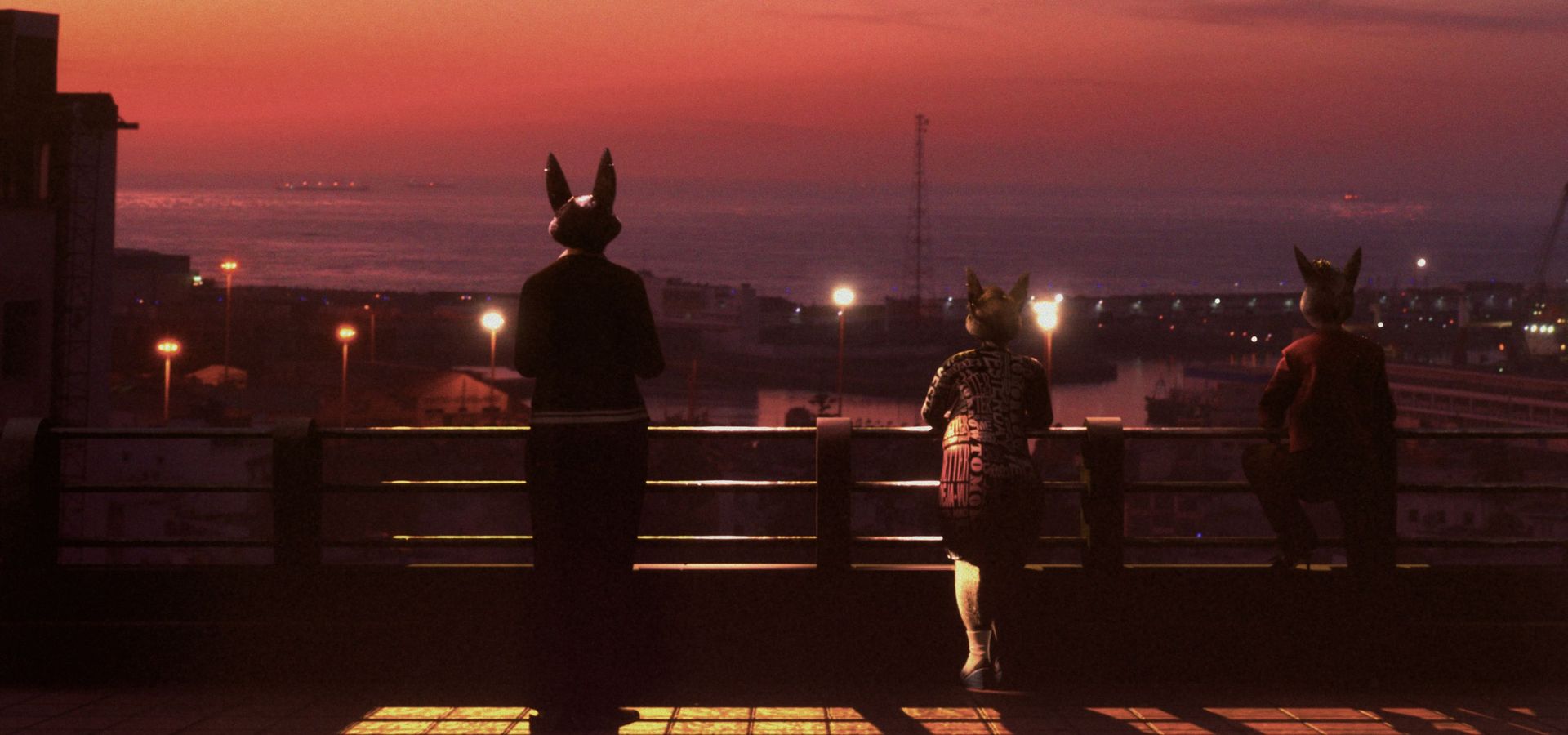
Stylistically, what’s particularly interesting about this film is that all the characters are depicted as anthropomorphised animals: Bouchra is a coyote and is joined by characters that include a cow (Bouchra’s ex-girlfriend, Nikki) and a lizard (Bouchra’s close friend, Yani).
Why does this film stand out to you in particular?
Of course, the anthropomorphised characters are certainly a part of what makes this film unique. As viewers we are completely absorbed by Bouchra’s world and the use of animals feels completely natural. The directors’ artistic choice creates a freedom in how the characters are portrayed.
This is very firmly a mature film that deals with identity, and unpacks what your relationship with your parents and your own memories mean for your identity. To do this, the directors play with meta devices, creating a film within the film and meta-fictional versions of the characters.
In terms of other things notable points, this is a Moroccan co-production and it’s noted as the first Moroccan animated feature, so that most definitely makes it stand out.
Why did you enjoy this film personally?
I really enjoyed the mix of tones in the film. It's very funny, but it's also poignant and that personal nature of the story that I mentioned really, really comes through. Bouchra is emotional, but nuanced, and dances a fine line that enables the film to explore the challenging parts of somebody's life that they're working through.
Why do you think the filmmakers chose to cast characters as animals?
Meriem Bennani, is a visual artist who has worked in animation and had previously used anthropomorphised animals in her art. The other half of the duo, Orian Barki, is a documentary filmmaker. During the pandemic, they came together to produce some short films.
When we were all bored during lockdown, while some of us were baking, they created a short-animated series called 2 Lizards.
And those little two-minute episodes were really popular on Instagram. And through that, their route to making Bouchra came about.
Also, in terms of representing a queer character on screen, I think using a coyote or a cow, it really gives the filmmakers a freedom to present scenarios that might be more difficult to see, or might be more expensive to do, with human actors.
Has their style changed since their early days of animated shorts?
There are definitely core aspects that have stayed the same. They continue to use anthropomorphised animals as central characters as they did in 2 Lizards. In that web series, the whole focus was on portraying two friends chatting and just living out regular lives during the highly irregular COVID times. In Bouchra, the filmmakers build on that chatty, familiar friendship to create a fully fleshed out world.
In terms of how things have changed: they’ve moved from that short form two-minute format, and the scale of the animation has expanded. Their team is still small, but the creative team has grown for this step up into feature production.
When describing Bouchra, the directors talk about approaching animation in a playful, open-minded way. Rather than following one rigid method or sticking closely to the rule book, they ignore that the rule book exists and do it their way. This means using a blend of animation, visual art, and documentary filmmaking styles, rather than just sticking to “this is how you make an animated feature”.
How does the use of documentary filmmaking shape the film?
This is part of creating a film within a film.
We’re seeing the character of Bouchra making a film about a relationship with her mother. And then within that, we see another layer of the filmmaking process which takes on the documentary angle, particularly towards the end of the film - but I won’t give any more away, as I don't want to spoil it!
As it’s part of SCENE festival, what does the film say about LGBTQ+ experience?
It’s certainly at the centre of the story.
And there's an element of navigating relationships with parents and relationships across cultures as a queer daughter, which is done sensitively. The directors avoid polarising experiences for queer people in NYC and Casablanca. The film focuses very much on tension between personal relationships. So Bouchra the coyote being a lesbian is at the heart of the story, and the layers of the narrative are built around that.
We also get realistic sex scenes in the film, which isn't unheard of in animation – Animalisa (2015) comes to mind -, but it’s not common, and having lesbian sex scenes in a queer film feels important.
What kind of audiences might enjoy this film?
LGBTQ+ audiences will find much to enjoy in the film, as will people looking for Moroccan animated content (there’s not a lot produced). The exploration of queer identity and navigation of relationships with parents will appeal to audiences from late teens to adults.
Audiences looking to try an atmospheric, quirky animation should book their tickets, and people who have seen the web series and who are already aware of the filmmakers’ work will certainly already be sold on Bouchra!
How does the animation stand out?
There’s a feeling of creative experimentation in the film. The cityscapes and locations have a photorealistic look, and the animal characters share some qualities with gaming characters. Though also in certain moments, the ways in which characters are presented are really detailed, particularly their eyes and fur. Because the whole story is so personal, everything feels very real and heightened, even though we’re experiencing some very human moments though animal avatars, so the eyes are an important device to reflect that emotion.
To me, the way that water is represented in the film is also very powerful. The depiction of rain, tears, saliva, and of water dripping as a leak in an apartment, all of those things, they looked amazing. This seems to be very symbolic throughout the film.
What was your main feeling once the film ended?
From a technical level, my thoughts were ‘how have they done that? How's that been made?’
Overall, there’s a lot of joy. Bouchra certainly carries you on an emotional journey, but you come out feeling joyful.
If you could ask the directors one question, what would it be and why?
It would be about their craft, about how they put the film together.
They use such a wide range of techniques and animation styles throughout the film; I’d love to hear them talk about their process. I’m very curious about the artistry of the animation.
And finally, if you had to describe this film in 3 words?
Personal, unique, and witty.