

Artist's Blog: BOY Theatre
Following on from their time at the Fringe, BOY Theatre is back and their show, CAMPITALISM: Three Gays Try To Fix The Economy, is returning to HOME as part of our exciting Spring 2027 season.
We caught up with this exciting company about their work, the Fringe and what’s next.
A Q&A with BOY Theatre
How did BOY Theatre begin, and what kind of work do you make?
We all met at an audition in 2023 and immediately bonded on account of our obnoxious gay appearances. After we all received a rejection email, we went for a drink on Easter Sunday to commiserate and the rest is history.
To get a sense of who we are, look no further than our manifesto which includes such thought-provoking tenets as: “EVERYTHING IS BOY EVERYTHING IS BUSINESS”, “GENTLE PORNOGRAPHY (SPONSORED BY CALVIN KLEIN)”, and “THE CHUCKLE BROTHERS BEFORE THE BIG ONE ABSORBED HIS TWIN IN THE WOMB”.
As Sun Tzu said in ‘The Art of War’: “The whole secret lies in confusing the enemy, so that he cannot fathom our real intent”.
CAMPITALISM: Three Gays Try to Fix the Economy is your first show as a company. What drew you to this subject matter and how did you make the show?
We met up for a coffee in 2024 at the National Theatre cafe and found ourselves sharing our anxieties around money. Kit had been stuck on the phone to HMRC for 40 minutes, Cherry was navigating leaving home for the first time and the hellscape of student finance, and Maria had just been fired. We all felt completely on the backfoot, wrestling with bureaucracy and terminology we barely understood yet which governed our lives. Something had to be done… And who better than three financially illiterate gay theatre-makers to answer the nation's call. Also, the character of the Canary Wharf finance bro was uniquely alluring to us as a bastion of British upper/middle class masculinity, especially with the rise of hustle-culture influencers like Stephen Bartlett and shows like Succession and Industry finding such widespread success.
We began making the show in November 2024 through an R&D at London Bubble Theatre in Bermondsey (who have been champions of us from day 1). We got a friend's dad who worked in something vaguely money related (shout out Kevin) to send us a voice note answering the questions ‘What is money?’, ‘Why is money?’, and ‘How do we get money?’. We named our characters Brian because there was a mug in the rehearsal room that said Brian on it and we thought that was funny. We also got a group of fellow 20-something, artsy friends to spend an afternoon with us to just talk about money - how it makes us feel, what we don’t understand about it, what scares us about it, what we would do if we didn’t have to worry about it. At the end of the R&D, we realised we’d accidentally made a full-length show, not the pre-agreed 20 minutes.
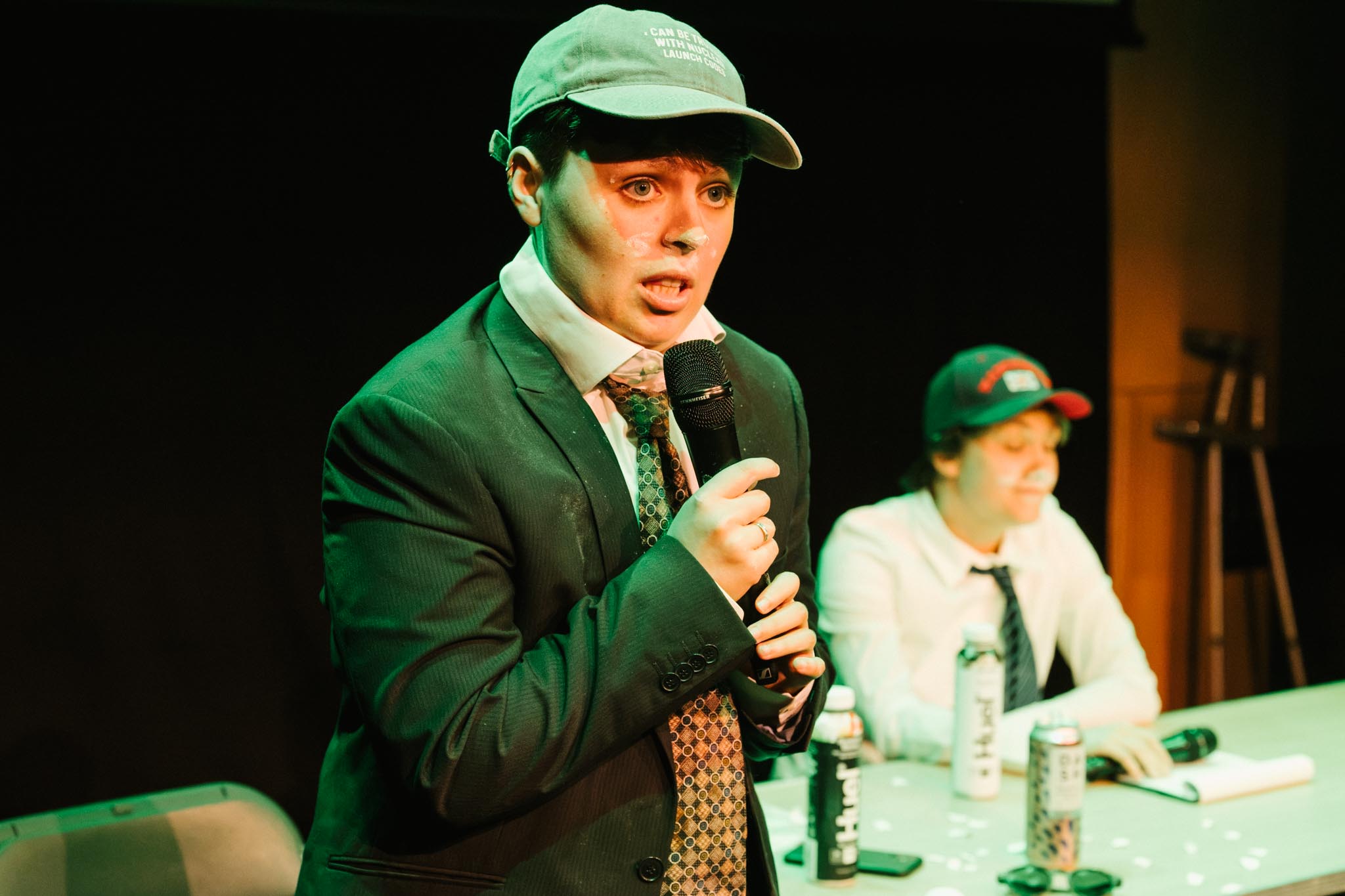 |
Image credit Charlie Swinbourne
How important was it for you to take the show to Edinburgh and what were you hoping to achieve?
Edinburgh was our ambition from our first ever R&D. Where else are you going to have such a high concentration of audience members, reviewers, programmers and fellow theatremakers wanting to see something fresh and alternative and willing to take a chance on someone they’ve never heard of. For us, it was an opportunity to kick down the door and introduce our unique brand of political stupidity to the industry. Obviously, we were also hoping to become the next Fleabag/Baby Reindeer/Six, and while we haven’t heard back from Netflix yet we’re certain the extended tales of Brian, Brian, and Brian will be hitting the small screen soon enough.
How did Road to Edinburgh help you test and develop the show before the Fringe?
In June, Maria suffered a freak micro-scootering accident on Rye Lane (and the nation wept) which resulted in a broken ankle and she was told by doctors she wouldn’t be able to put weight on it until August. The show was very suddenly in jeopardy and it looked as though we might have to cancel the run. Road to Edinburgh gave us the space to adapt the show, which previously was very physical with multiple showstopping dance numbers (trust us, they were majestic). The opportunity to share the show in a low-stakes and open space proved absolutely invaluable. The audience feedback allowed us to find the balance in the humour and more earnest moments and to refine the message of the show. Without that space to experiment, we would have gone into our Fringe run totally blind.
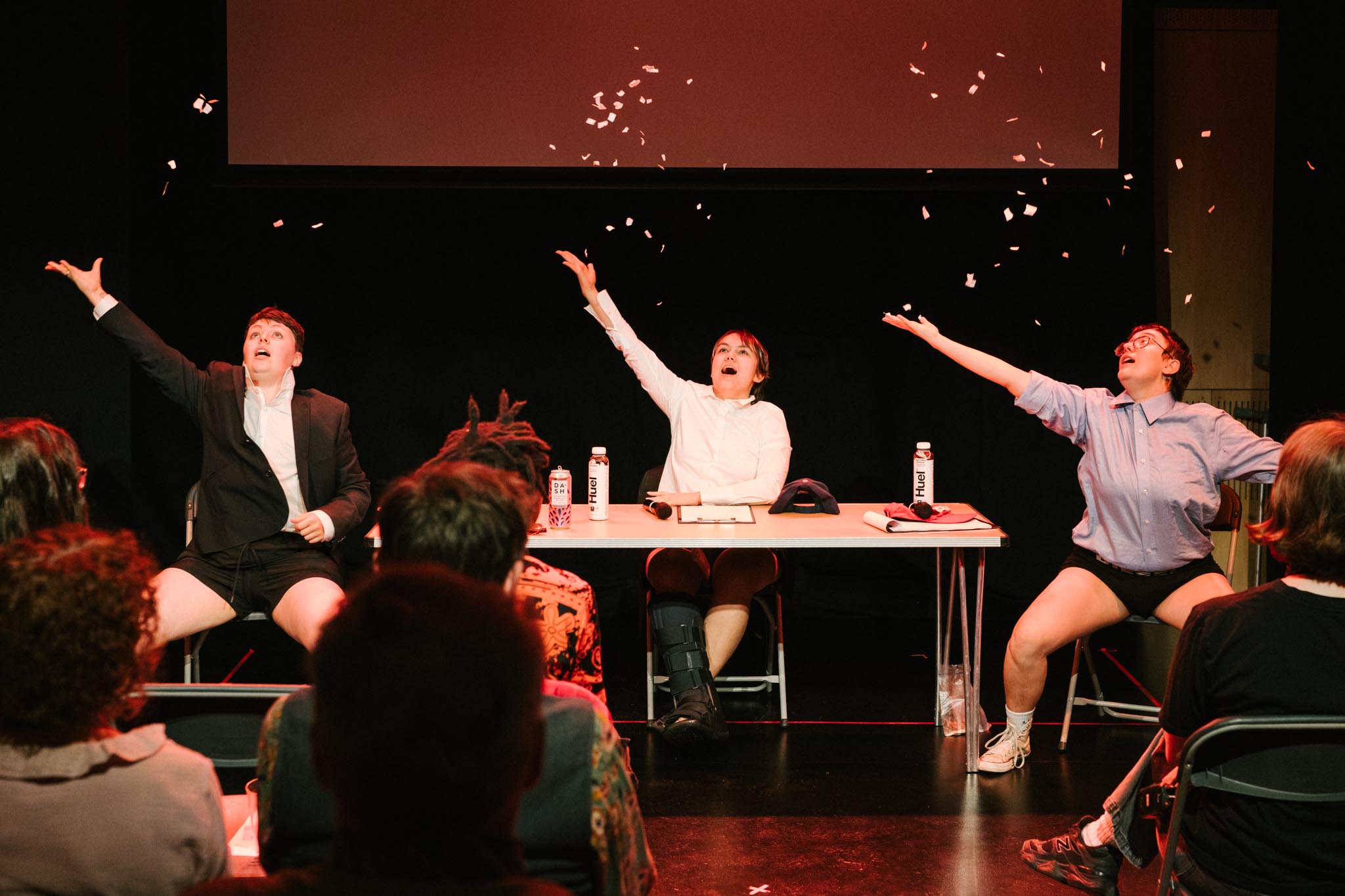 |
Image credit Charlie Swinbourne
What was taking your first show to Edinburgh really like—the highs, lows and costs? What advice would you give Fringe-curious artists, and was it worth it?
It was absolutely worth it for us. We were exceptionally lucky to also have support from Pleasance and Leicester Curve which removed a lot of costs, such as marketing and PR, making Edinburgh viable for us. We think we received up to around £10,000 worth of support, which is the only way that we could make it happen the way it ended up! It’s ironic that the only way we could make a satire about money is through having money thrown at us (not literally - although that would be nice?).
Edinburgh ultimately is not the be-all-and-end-all. Fringe is a fantastic incubator for new, ambitious work to grow, and for it to be seen by a worldwide audience. However, we know that many theatremakers do incredible things and make names for themselves without ever having to navigate the Fringe.
From our experience, we realised that the best way to approach Fringe is think of it as a stepping stone for your show’s future life. Think big picture post-Fringe before you go up, so that you can use Edinburgh as a huge leaping off point (and invite venues and reviewers along!). That having been said, you will become a better artist after Fringe no matter what the future life of the show ends up being.
Our advice for artists would be to take care of yourself and your team while you’re up there. We spent a lot of evenings in, watching movie musicals and drinking Irn-Bru and vodka. The Fringe is exhausting and can be demoralising at times. We all got ill at different points and had a few tough performances which resulted in Cherry jiggling her tits to silence. Every show is completely different, and the most important thing for us was to hold each other (both physically and metaphorically) through all of it. It’s kind of like a team sport.
CAMPITALISM: Three Gays Try to Fix the Economy received glowing reviews across the board, sold out its run and won not one but two awards - huge congratulations! What does this recognition mean for you as artists?
After spending so long lying embellishing the truth about our qualifications as a theatre company in applications, it's really cool to have something concrete to point at and go “Look! We’re good! We promise! Other people agree!” It’s really quite overwhelming. The company and the show began as something to make each other laugh - we couldn’t imagine anyone aside from us would find our dick jokes as funny as we do. Now we have this recognition hopefully it means we can keep making work together and making work that is bigger and weirder and sillier than ever. Our brand and philosophy as a company is very much built upon being gay losers so it’s quite strange to now be gay winners.
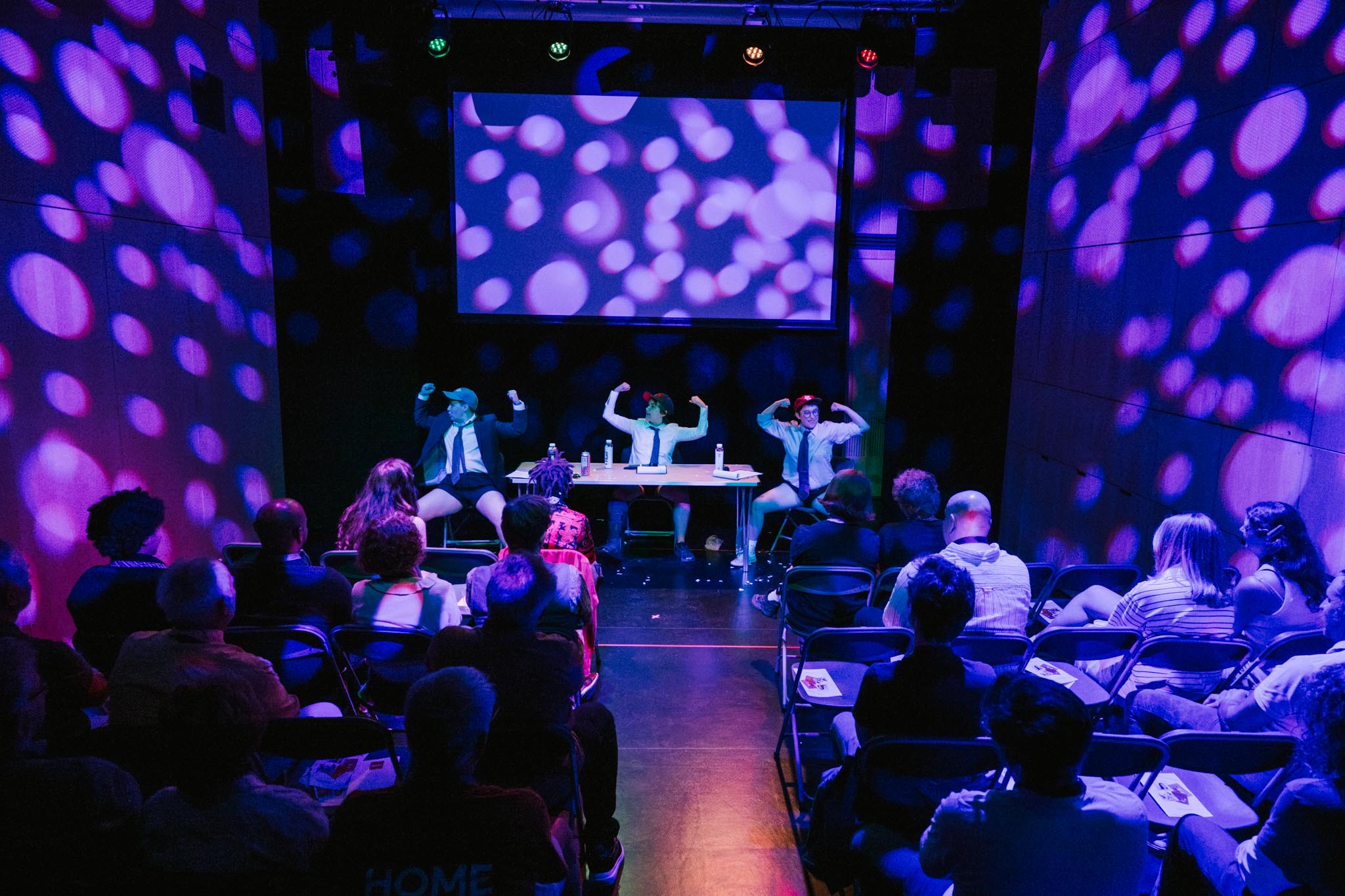 |
Image credit Charlie Swinbourne
What’s next for Boy Theatre and the future of CAMPITALISM? How will you maintain your links to Manchester?
Manchester. Greatest city in the world… No, but really we love it here. Cherry’s lived here for the last three years and it’s been our ambition to bring BOY to the city for a while. Maria visited Manchester for the first time this year and now wants to move.
The next thing for CAMPITALISM is going on a world tour! (Focused solely on the UK) We’re programming venues across the UK at the moment, including in Nottingham, Birmingham and London, and fingers crossed a Manchester run is on the horizon (keep your eyes peeled!).
More than ever, CAMPITALISM is a show that is so relevant for the state of current British economics and politics, and especially with our new PM, Manchester is somewhere that BOY feels that our work is heard and felt.
We also can’t wait to start developing our next show (it might be something to do with the theatre industry and our relationships with our fathers) and we really hope HOME will keep letting us back in?
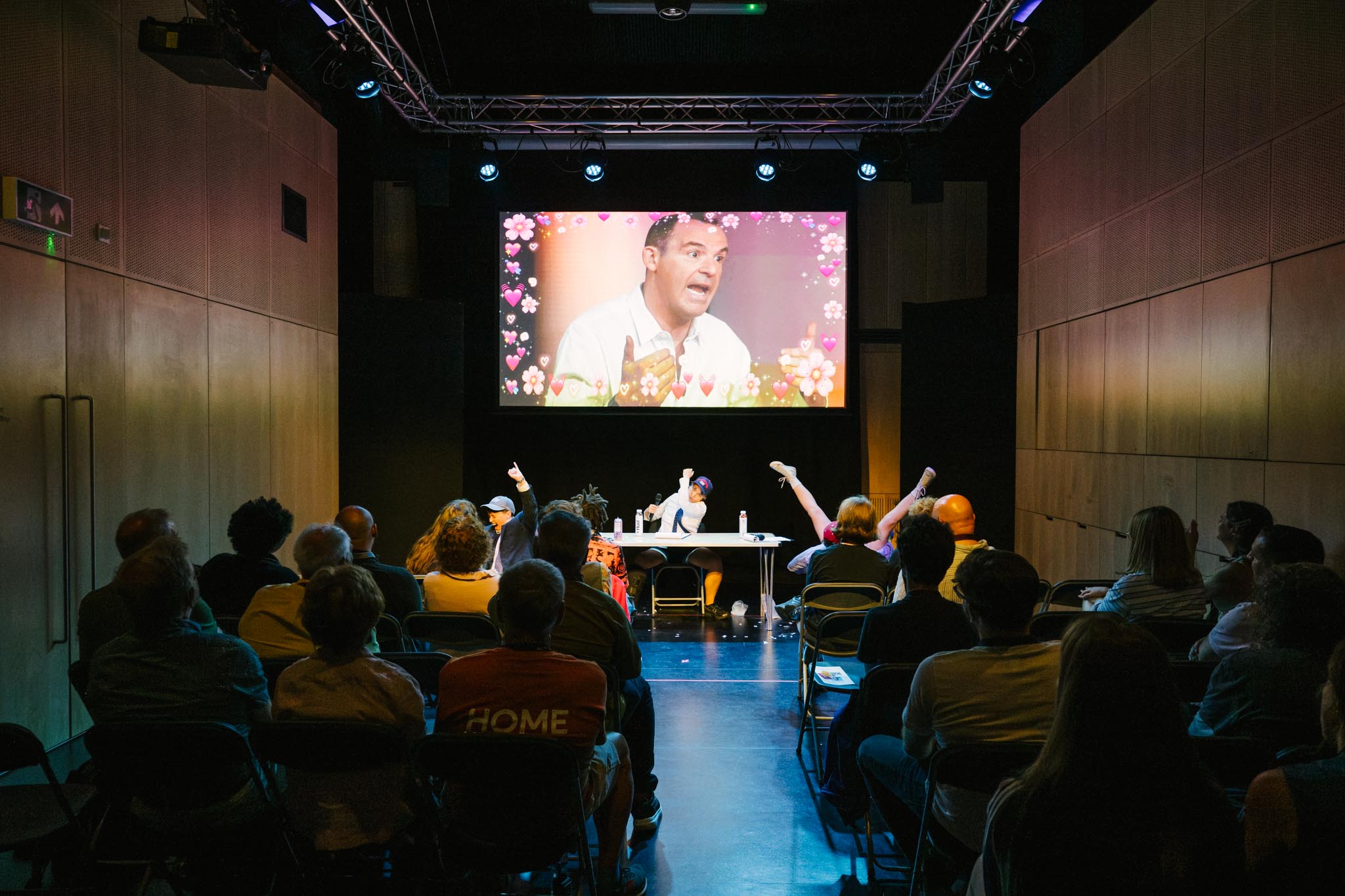 |
Image credit Charlie Swinbourne