

Under the spotlight: Othello
Putting Othello under the spotlight...
From Sep 30, audiences can enjoy an exciting new adaptation of Othello at HOME.
Award-winning director Anthony Almeida relocates the action to Britain during the early 1980s, and embraces bold visuals and performances to magnify the essence of the original text. Alongside Northern Stage and Citizens Theatre, Othello is co-produced by HOME.
With bold creative direction and plenty of surprises for theatregoers, there’s a lot to unpack about this upcoming production.
To learn more, we spoke to Remi, Head of Theatre at HOME…
Firstly, why did you choose to programme this show?
I think Othello is just a unique story that really does speak to modern times.
This is a man who is essentially “the other”, in a world where everyone else looks different to him. He has to find a way to navigate through that, and he navigates through it very successfully, actually, to get to the position that he actually gets to.
However, there are a lot of obstacles in the way. And I think that's a powerful story that's been universally true for centuries, for many people who are the “other” – there’s always barriers in a way of them succeeding and striving to be better. So it's always going to have that poignancy.
It’s set in 1980s Britain: why do you think this particular setting lends itself to this adaptation?
This production is based during the times of Margaret Thatcher, with the Falklands War as a backdrop. And that was obviously an interesting time. There was advancement, but there were also people left behind.
As a result, those that were left behind became the "other", a central theme of the play.
With any conflict or war, there’s an element of people coming together and people being torn apart. Both sides get elevated. So you have serious divisions, but you'll have also serious community and togetherness.
Typically, both will happen at a much more exposed and extreme rate. And this play, that's what it does, it goes into those extremes really well. And I think that's something that can be celebrated, that it's not either or, it's both.
There are moments in this play where you have people from different backgrounds, from different communities, coming together in celebration – singing songs together, dancing together, and just being happy together.
You’ll see a lot of 80s pop culture references, especially within army barracks, of people coming together, having a drink, community, familiarity, and seeing people just having a good time on stage.
How does Anthony Almeida (director) add something different to Othello?
So Othello is a play that in general, has been done many times by many, many different people.
But in this adaptation, I feel that Anthony Almeida really gets to the heart of what Shakespeare was actually saying.
This is a play where it's almost going beyond purist. The points Almeida’s making about the ‘other’ and how everyone, at some point, is the ‘other’, is universal. And I think that is powerful and something that should be discussed more.
We are all the same in that we are all different.
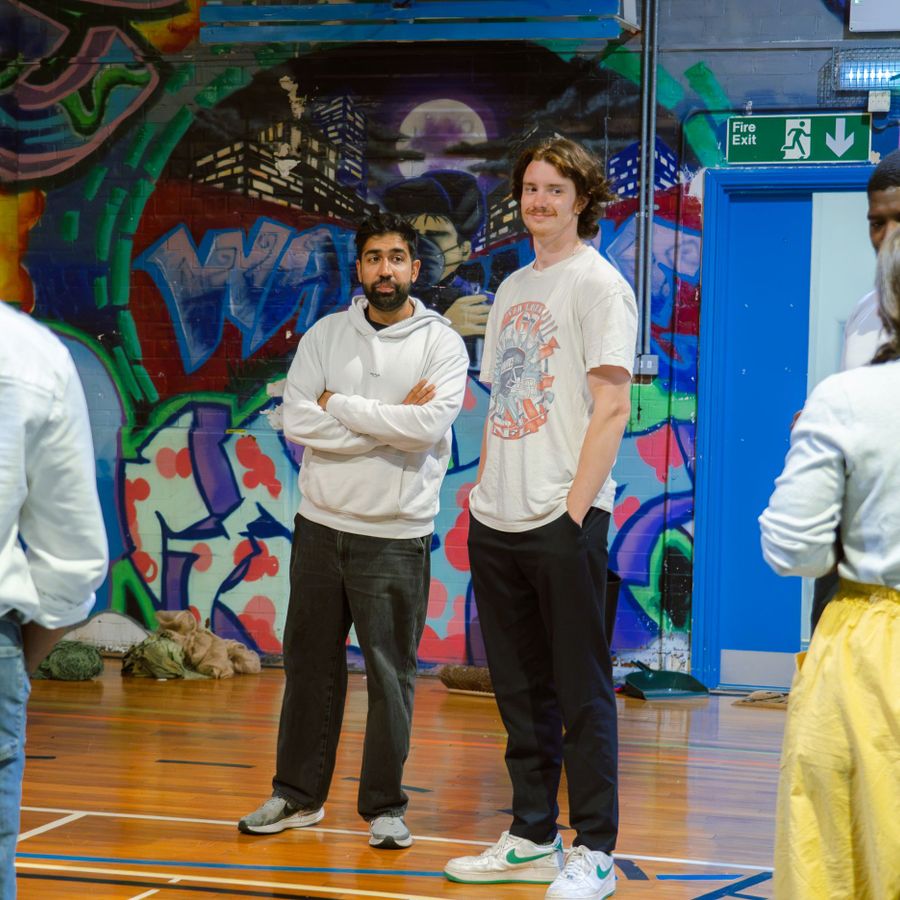
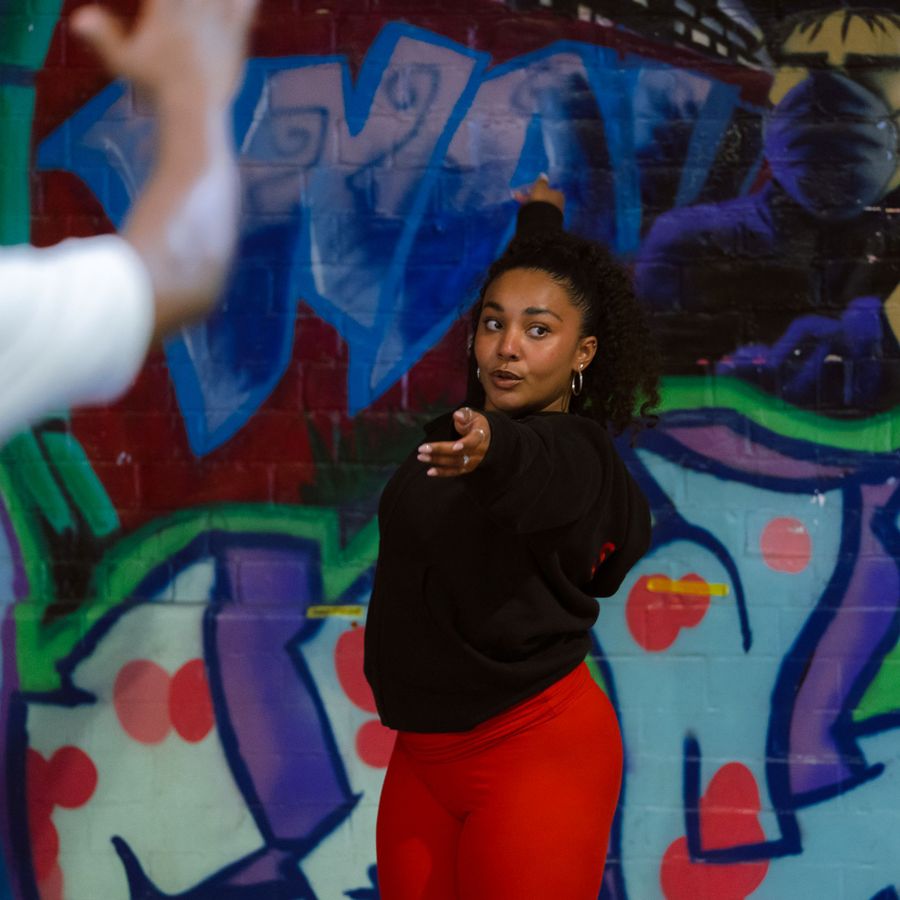
You went to see the cast walk through lines recently: how was that?
I did.
I got to see a bit of the R&D (research and development) and it was beautiful. I think the cast are phenomenal.
It’s like when you do a school project and you’ve got lots of people who just get bundled together. And sometimes you have those school projects where everyone just works well together. It just fits, it just works. Credit to Anthony Almeida (director) for putting that together.
What stood out to you about the read-through?
It’s very Northern.
One of the main things that surprised me is that the text is fully Shakespeare. So if you like Shakespeare, you will love this.
But what I found interesting for perhaps non-Shakespeare lovers, the director emphasized that Northern twang – to the point where I didn’t even know myself that that was completely Shakespearean text.
I asked Anthony Almeida (director) if he had changed the text, and he hadn’t, he had just been directing the cast to add their own personality to the point where it feels like you’re not listening to Shakespeare, even though the words are the same.
How do we experience the modern landscape with the traditional Shakespeare text?
The visuals.
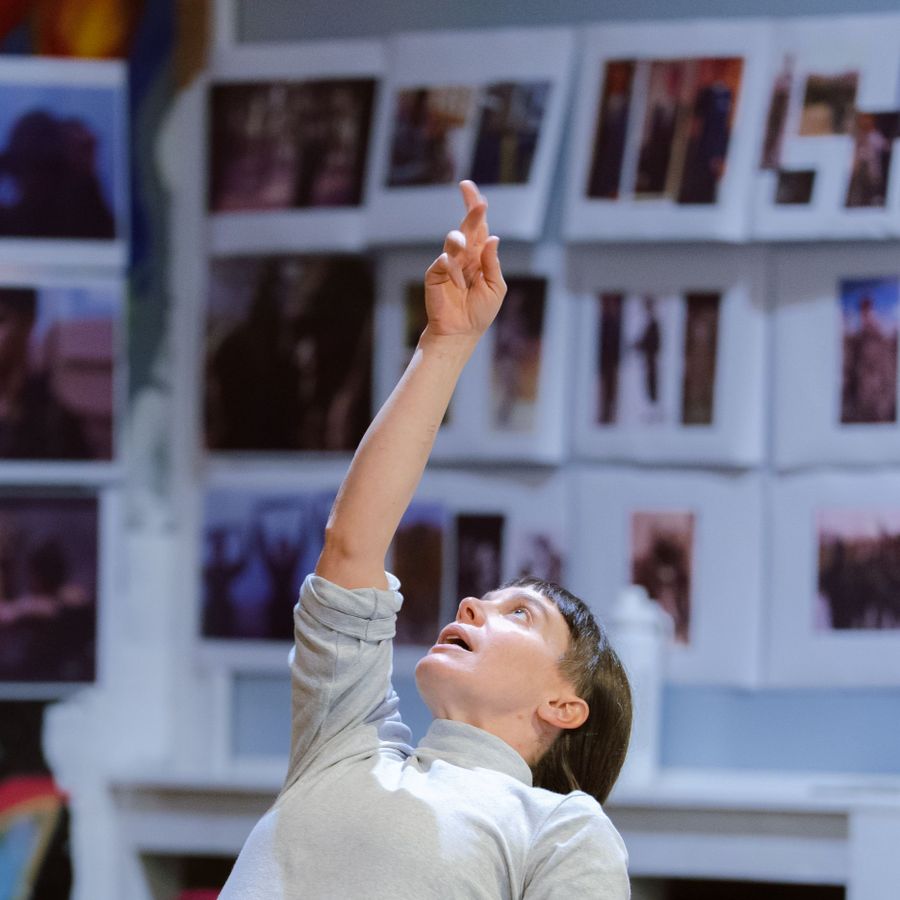
Video is a massive artistic element of what we see on stage. There’s a lot of visuals that pay homage to that 1980s culture, raw Britannia so to speak. The video intrinsically links in with the theatrical world live on stage. It's really interesting how Anthony's managed to do that.
For those that don’t know Shakespeare well, the videos will tell you where you’re at within the play. From the newsreels of Margaret Thatcher speaking about the Falklands War, to different politicians, and different music, they will give that visual aid to help those who aren’t Shakespeare aficionados.
How does Almeida use stage setting and costume design?
If you like 1980s fashion, there's a lot of 1980s fashion going on in there.
Even the army gear, it's amazing. We're going to be having rifles in there, so if anyone's into shoot ups and fight scenes, you’ll be pleased to know that the fight scenes are extremely impressive.
It’s quite simplistic in its staging, using just a cage.
But that cage is used in so many different ways (which I can't spoil because you need to see it!). I was thinking ‘I never knew a cage could do this…”
It completely transformed the space in each scene. There’s parts where you feel like the actors are in a cage, and other times where you as an audience member might feel like you’re in a cage. So it’s really interesting how artistically they use that set.
The simple set up conveys really powerful messages.
Finally, if you could describe the performance in 3 words, what would they be?
Energetic, engaging, and real.