

Under the spotlight: August Wilson's Fences
Putting August Wilson's Fences under the spotlight...
For the first time in over a decade, Manchester audiences can experience August Wilson's Pulitzer prize winning play on stage.
Before August Wilson's Fences arrives at HOME (Tue 3 Nov - Sat 7 Nov), we spoke to Head of Theatre, Remi, to learn a little more about why he's so excited for this play to come to HOME.
From its timeless themes to its new slant from award-winning director Daniel Bailey, read on to discover what makes this production one to watch...
Why has HOME chosen to co-produce Fences?
Remi: Yes, this is one of HOME’s major co-productions this year. It encapsulates what HOME is all about, which is about making great art, with great people, for great audiences.
For Fences in particular, the reason why we decided to give the show our backing (along with Headlong, Leeds Playhouse and Lyric Hammersmith Theatre), is because of the universal brilliance of the work itself.
This is for true theatre practitioners who like to see works that are classics.
And for me, growing up, I never really saw work from Black authors and Black writers in the theatre world, telling stories through the Black lens. And I’ve very rarely seen anyone do it as good as August Wilson.
What made me interested and, I think, what made all the other venues interested, is because August Wilson sits in the canon of major playwrights to this day, because he was one of the first to say “Let's look at the Black experience, of living in America, but also let's look at the Black experience of people living in other countries where they may be the minority.”
And August Wilson really captured that. He captured that experience in a way that someone who is Black could identify with, and someone who from any other culture or any background could also identify with. What he did really well, is show the “humanness” of people, our human nature.
How does the story resonate with today’s audiences?
Remi: So first, it's important to say with August Wilson's work, Fences is a part of a cycle. There's actually nine other plays that August Wilson wrote as part of this cycle (collectively called The Pittsburgh Cycle), including Ma Rainey's Black Bottom, another well known play.
And what all of these pieces of work do is capture the experience of living in a society that is moving forward really fast, and maybe leaving some people behind, or they follow people trying to catch up with where things are heading.
As we know, fences keep people out, but they also keep people in. And that’s the reason it's called Fences, because while the characters are building a fence, what they're really trying to do is keep the things that they're holding dear in an ever-changing world.
They want a close-knit family. And they all want to come together, keep together, and grow together as a family. So the fences that they're building are trying to keep that family unit in, while keeping things out that would destroy the family.
We live in a world today where that's very clear now, like with the rise of social media, AI and everything else. So we keep those times where we communicate sacred, whether that's going out for a Sunday roast, or going to the pub together, to try and keep that community and communication.
You work hard to build a fence around those types of things.
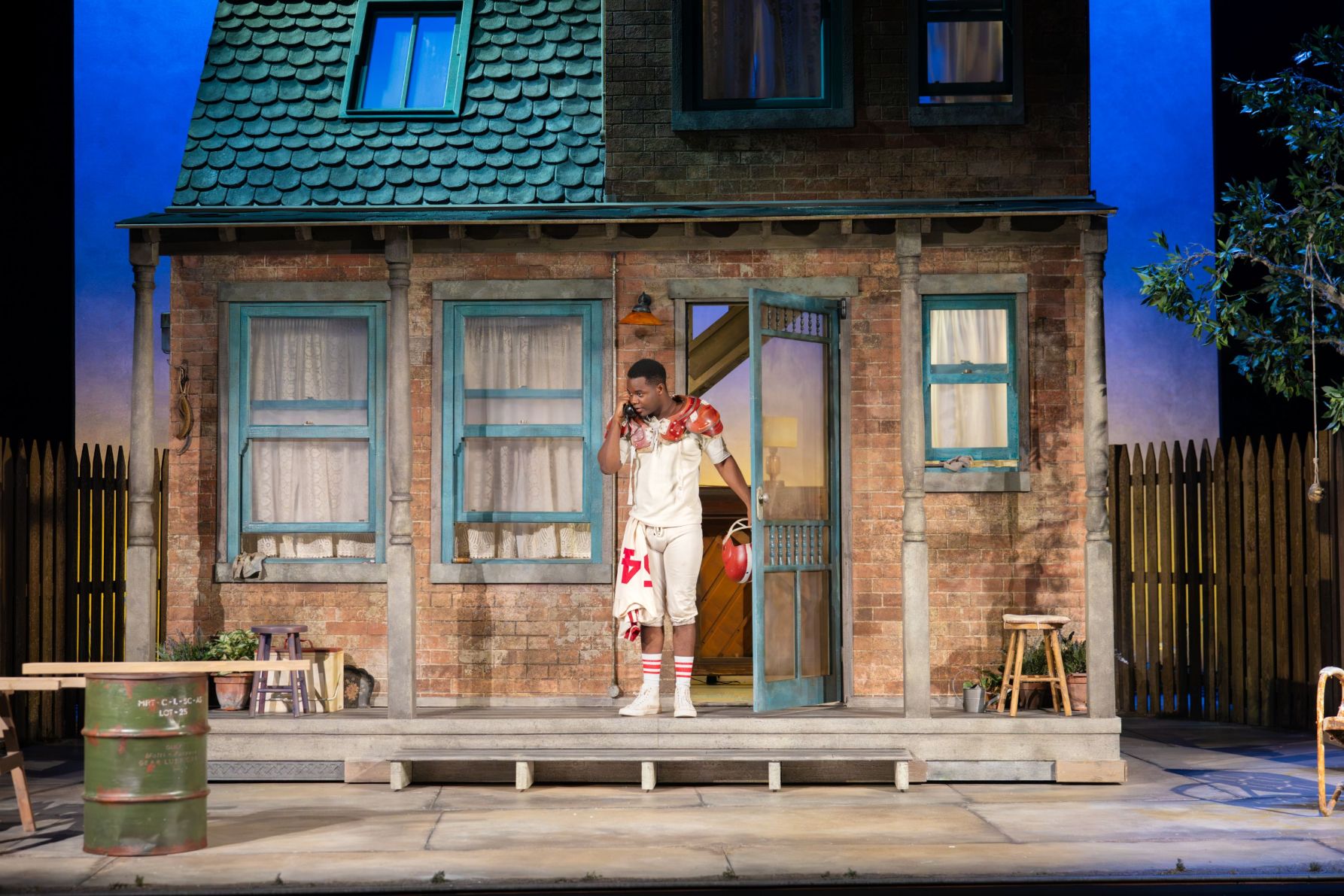
When you saw the play when it opened, what really surprised you?
Remi: This is a tricky one without giving too much away.
I'll say the music and the way the music and the play blended together, I thought that was fantastic.
The show’s opening was absolutely a “wow” moment for me. And then the transitions, the music, how the jazz music was used in the transitions, I thought that was phenomenal.
What has director Daniel Bailey done differently with the text?
Remi: It’s all in the way it’s performed.
So one thing we always do at HOME and what we're going to be doing more of, is staying true and honouring the text. But just because we want to stay true and honor the text, it doesn't mean that we don't investigate it and draw out the heart behind what the text is actually saying.
We want the audience to focus on certain things that maybe they never saw in the original text, and elevate certain parts of the text that people may have just glossed over.
Me and Daniel (Bailey) had a chat about it during the first rehearsal, about how Troy is seen to be the main character in Fences.
He's the one who talks and talks and talks. He tells 100 million stories all in one go. That's who Troy is. And a lot of the time people focus on Troy and think, Fences is about a patriarchal family.
When actually, if you really investigate the text, it's not patriarchal, it's matriarchal. The person who's holding that family together is Rose, the mother, the wife. She’s the person who's holding it together.
So what Daniel Bailey’s done is he’s really brought that out, and given her character gravitas with how the play is postured.
And I think that is a beautiful way bring out that reality, that truth, this power in her quietness. She's so quiet in the play, she doesn’t speak anywhere near as much, but her actions speak way louder than Troy’s words throughout.
Generally speaking, Daniel uses the set, movement and lighting to tell the story just as much as the words.
The power is in the subtleties: what isn’t said, as much as what is. Even if you know the play, that attention to its quieter moments offers another way into it.
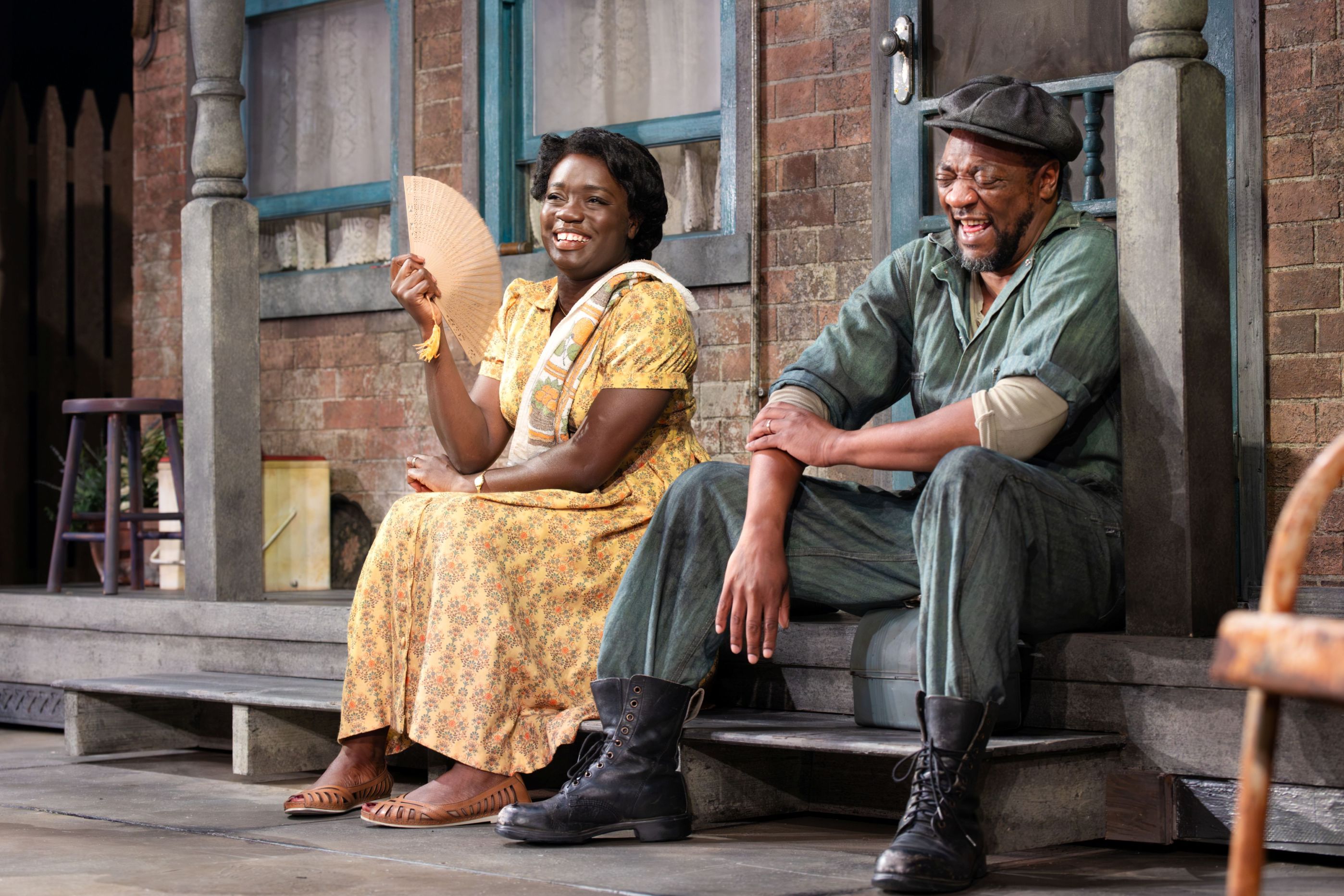
Credit: Headlong
For people who have seen the film Fences, but never on stage – how does it differ on stage?
Remi: The staging is so important to the way the story is told.
In the play, Daniel Bailey’s managed to tell the story through the setting. The beauty lies in the stagecraft. The way it’s built invites you to use your imagination.
The stagecraft, the way the house is built, and the movement all tell the story alongside the dialogue.
The house sits on a revolve, so it turns as the play develops. That movement isn’t simply a visual effect: it’s integral to the pacing. Without giving too much away, as the family unravels, so does the house. You begin to see what’s happening inside the building alongside what’s happening in the characters’ hearts and minds.
And I think that is really, really key.
Essentially, the house itself is tracking the acting and that's honestly something phenomenal that I've personally, as a producer working on many shows, have never seen before.
Do you need to know the story before coming along?
Remi: No. If your idea of a good night out is seeing a compelling piece of theatre and a story told in a masterful way, this show is for you.
You’re seeing artistic brilliance in actors like Ray Fearon, an extremely fantastic and accomplished actor, alongside direction by Daniel Bailey, and an absolutely immensely talented creative team and cast as well.
I’ve seen the play myself and – from the script and movement to the set – I think the production as a whole is one of the best things I've ever seen.
Finally, how would you summarise Fences in three words?
Remi: Family, community and perseverance.
Discover this timeless play at HOME:
You can experience this timeless story for yourself between Tue 3 Nov - Sat 7 Nov. Tap below to catch this astonishing piece of theatre at HOME: