

The joy of double-bills:
Film4 editor David Cox on cinema’s lost art form
An interview with the Film Editor at Channel 4
David Cox, Film Editor at Channel 4, collaborates with HOME every Halloween to bring you a spooky weekend of film. And this Halloween, he's bringing an almost-lost art form back to life: a cinematic double-bill.
A once-popular way to enjoy cinema in the 60s and 70s, the rise of streaming has since given the format the kiss of death.
But this Halloween, it's risen from the grave...
We recently spoke to David Cox to learn more about this now-novel way to experience cinema:
First, if you don’t mind introducing yourself to our readers…
My name's David Cox and I work for Film4, programming the channel. We started working with HOME about 10 years ago.
FilmFear was set up as a celebration of new horror films that Film4 and HOME would support together and celebrate together.
So this year we’ve shifted from new horror releases to celebrating more classic horror – why is that?
There was a feeling that the classics just seemed to be more popular. And around Halloween, there seemed to be a desire for people to take pleasure in horror.
I think people have old favourites, comfort watches, which seem to be more in the spirit of the season. I guess people make costumes of their favourite characters and tend to gravitate towards tried and trusted horror tropes.
So in a way, by doing classic films, audiences seemed to be telling us that's what was wanted rather than new films.
There's a time and a place for new films or festivals with a horror fan base, but Halloween felt like a time more to celebrate the fun, the familiarity, and the conviviality of gathering together and enjoying a horror film.
And that's harder with a new film, because you don't know what to expect and you don't know if it's going to be too much or if it's the wrong sort of thing. So I think classic horror films is more in keeping with the spirit of Halloween and that aspect of of gathering together to enjoy being scared together.
Horror is having a bit of a moment lately. Do you think screening old classics is a way for newer horror fans to go back to basics?
Yeah I think that’s true. I think people do increasingly enjoy tracing these films back to the source.
As you say, horror has certainly had a new popularity. And I think something like Letterboxd has made people a little bit more engaged with, not just new films, but also looking at what people have watched and what people’s favourites are, and then wanting to go back and explore those as well.
So it’s created more of a community around older films. And as that goes on, you're increasingly aware that a lot of people haven't seen these films on the big screen and that they're a completely different beast, literally, on the big screen.
New horror films like Obsession and Backrooms have been bringing in younger horror fans.
These younger fans may well have seen some of these older films, but streaming them at home or on your own, you don’t really get the full power of them. So it’s a good time to bring back the classics on the big screen.
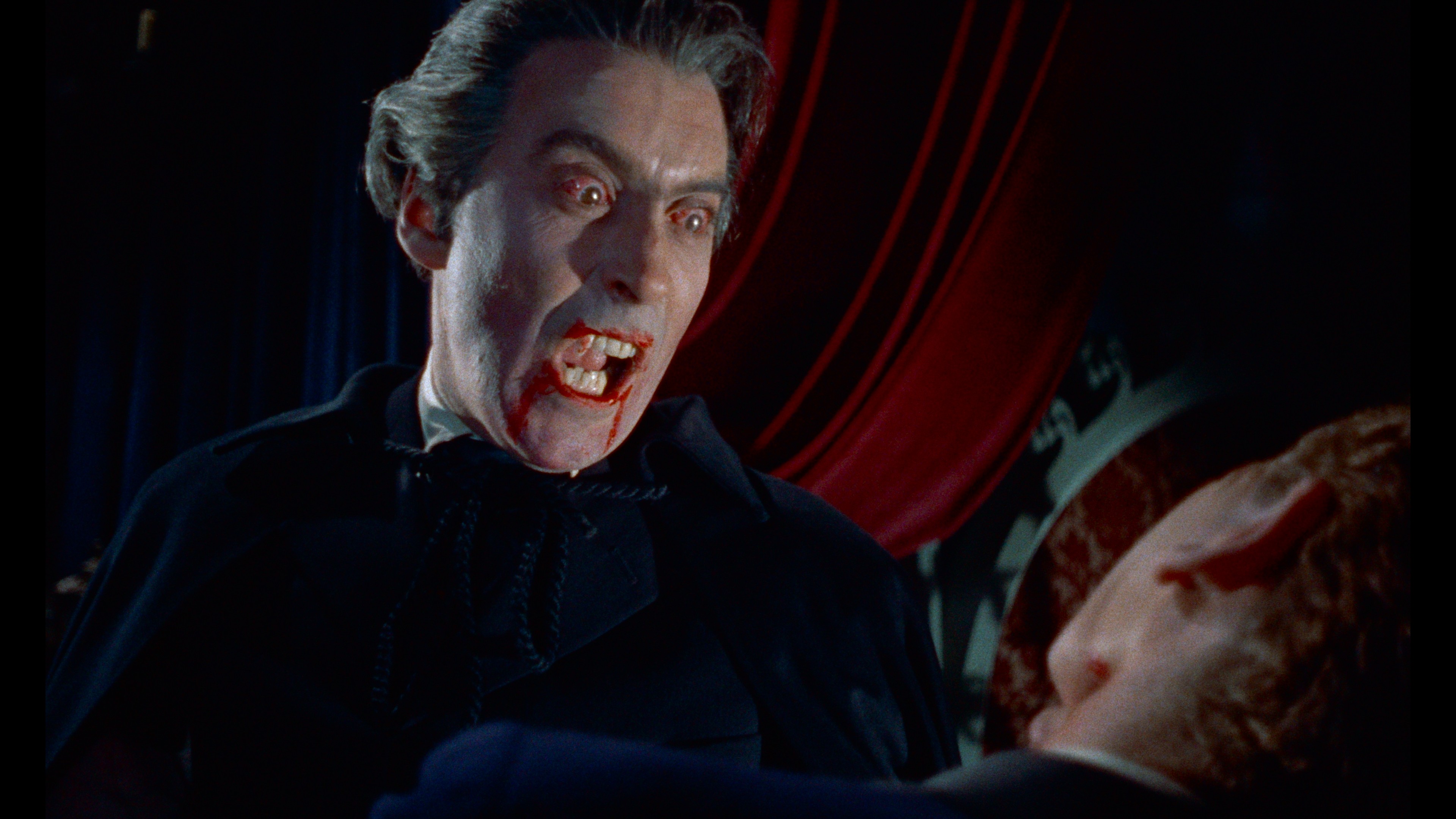
Dracula - 4K Restoration
So why did you choose double-bills as the concept for this year’s FilmFear?
Last year, our season theme was horror films from the 70s. So there was a very much a retro feel to that, all focused within one time. And that worked well.
But in the end, as much as I think as it’s instructive to pick a theme or an era, it's also instructive to remember how people used to watch films or enjoy films – rather than simply just what they watched.
We were asking people to enjoy older horror films or come together to watch a classic.
But there are also ways of watching films that have been slightly forgotten, like a double-bill.
I think people still understand what a double bill is.
But in the 60s and 70s, into the 80s, the double bill was quite a staple of cinema and a particular draw and a particular sort of programming. And there was a particular skill and also a complete kind of absence of skill in putting those double-bills together back in the day!
So what makes watching two films back-to-back so enjoyable?
Watching two films in a night makes each evening feel like a real event to some degree.
Plus, it just can shed light on films in a different way.
If you put the films together in the right way, or even if you don't, everything feeds off each other. There’s an enjoyable, communal energy in being together for two films as one audience, and all coming back to your seat and still being there for the next film.
And often it makes you appreciate the first film in a different light, once you're watching the second one, or you might find an unexpected link.
But in the end, I think even going to the cinema now for some people feels nostalgic or old-fashioned, if you're very used to streaming.
So this is another layer really of how people used to enjoy films and just to remind people that you would go out for the whole evening for entertainment. You wouldn't see a film and then go home again. You would be expecting something to follow on.
A double-bill just can be a fun time really, because you'll end up wanting to go and see one film and then you just sit through the next one – but sometimes the next one is the one that kind of hooks you and means a lot.
Can you remember seeing a double-bill that didn’t work well?
I started going to the cinema on my own around the early 80s and that felt like the tail end of double-bills being in regular high street cinemas.
I remember going to see a double-bill at my local cinema, which was Campsite Massacre, which was a standard slasher film. And that for some reason was paired up with a film called Hellcat Mud Wrestlers, which was a strange kind of half-documentary, half-narrative story about female mud wrestlers.
I think, most likely, it was the same production company just putting them side-by-side to sell them both.
I remember the poster. One side was people screaming in fear and a big knife. And the other side was massive women in bikinis fighting in a muddy pit.
That was probably one of the most extreme double-bills, because they really didn't fit together. But at the same time, you saw a really disreputable horror film and then a really strange, disreputable semi-documentary.
So in a way, they kind of fit together. You just felt like, “oh my God, we're really going to see something here we shouldn't be seeing”.
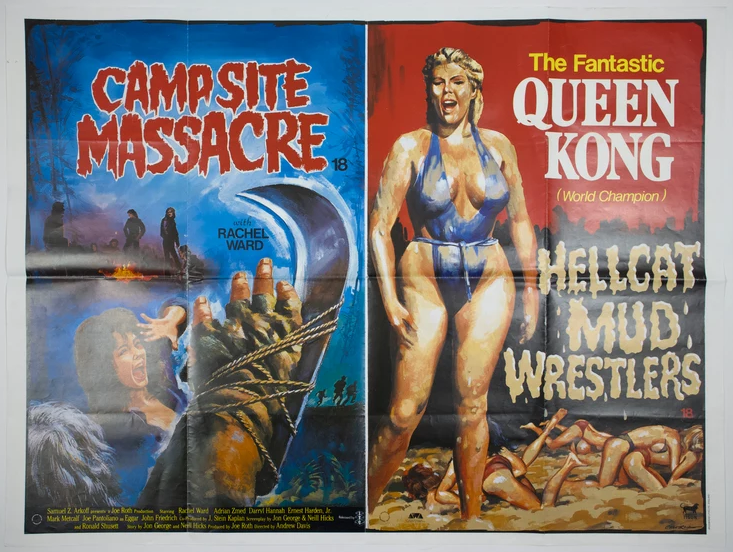
The poster of the Campsite Massacre and Hellcat Mud Wrestlers double-bill
What’s the secret to a good double-bill pairing?
I’ve always thought it’s the spirit and tone.
You’ll watch the first film and you just think, “I'm in this sort of mood now”. And then you watch another film that matches the same spirit, but heightened or more intense or funnier – that’s when they work best.
So I always think double-bills should be linked more through just a general vibe over anything else more academic than that. It’s nice to feel in a certain mood and then experience a kind of shift that takes you a bit further in one direction.
Why does horror work well for the double-bill format?
The films are often short and relatively simple. You can sit through two horror films quite happily and have a good time. You wouldn't necessarily think to sit through two big drama films or two comedy films.
It’s that feeling of fun, of being together, and of being through an experience and you come back again. Sort of like a roller coaster that you get to go on twice in a row.
Horror films are best to watch with an audience too. You go back in to watch the second screening with the same group of people, and you’ve already got a sense of what the person at the end of the aisle is going to shout about.
Which pairing are you most pleased with on HOME's lineup?
I’m very happy with the Quatermass and the Pit + Lifeforce double bill, because they're films that don’t show on the big screen very often.
Lifeforce is a really wild, outrageous film that people don’t necessarily know that much about.
It's a nice double-bill because it connects to a very particular sort of horror history from the 60s from Hammer Films and the slightly strange science fiction films that Hammer Films were making at the time.
You can kind of trace quite a specific link between the sorts of influences, but then feel so different. So you could watch them both and think, "this is actually the same film as that film I just watched". And yet it's a completely different atmosphere, style, and tone – it’s so much more permissive.
Lifeforce from the 80s is so much more wild and unrestricted than the Quatermass and the Pit was from the 60s. So you start to think,“is that necessary? Does that make it more intense?” So you start to understand how a different sort of style of telling a story can give you a different effect.
Quatermass and the Pit is a Hammer film from the 60s, which has got wild ideas, but it's pretty buttoned up and restrained, even though things that happen in it seem outrageous, you don't really ever get a full sense of what’s going on – whereas everything that was hinted at can be shown in Lifeforce.
It has none of the same restraint because, in the time between the two releases, there was a change in film censorship.
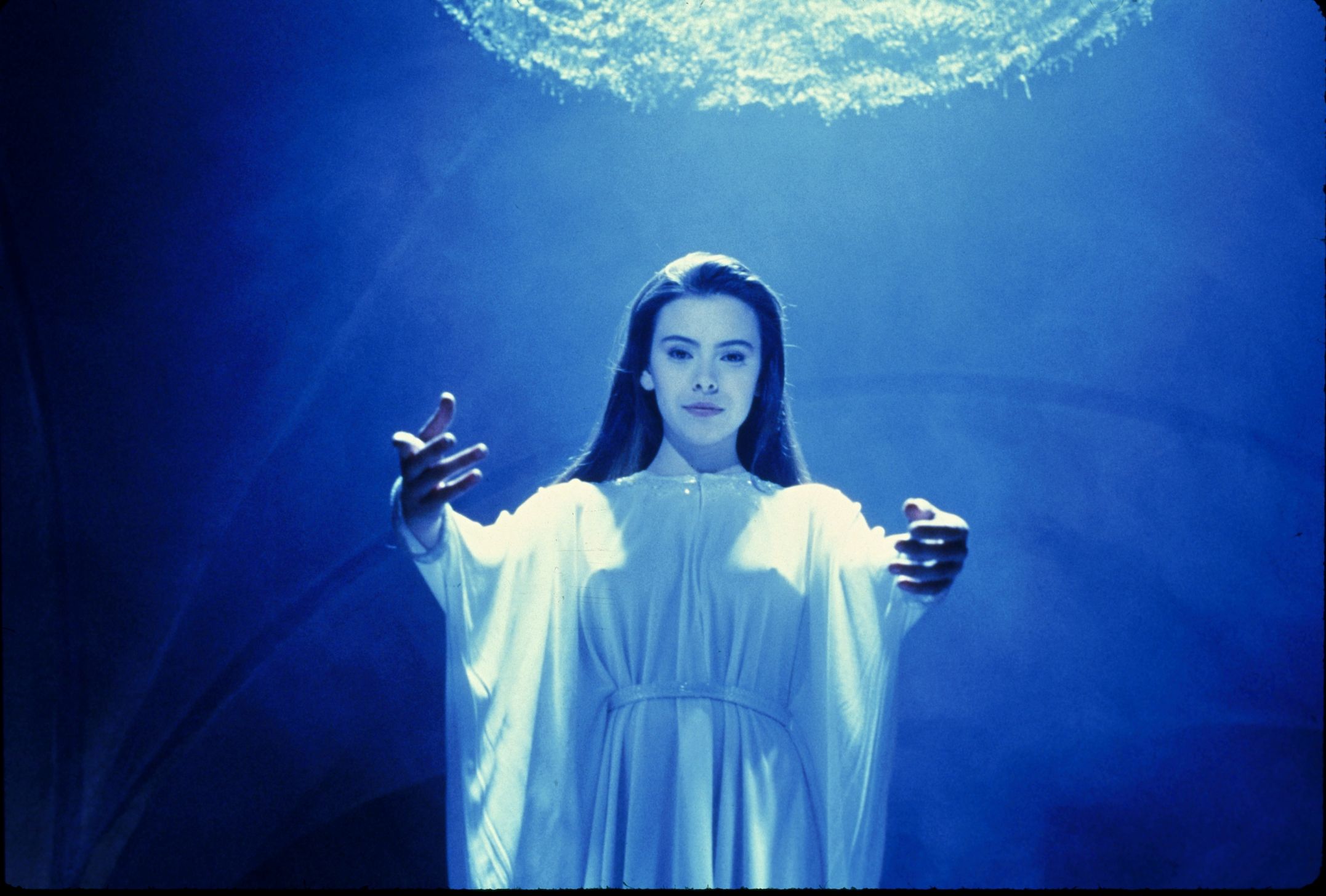
Looks like comedy horror fans have got a treat on the lineup…
Yes, the An American Werewolf in London + Shaun of the Dead pairing was actually curated by the Young Creatives initiative at HOME.
They're both very scary as horror films. But then the comedy is very British and dry. And yeah, sort of silly, but genuine – they're both genuinely funny and genuinely scary and have a real appreciation for city locations, and what it means to be in a city with this stuff happening around you.
It’s a really lovely pairing, I think, to bring those two films together.
The director of Shaun of the Dead, Edgar Wright, his favourite film is actually American Werewolf in London. It's the film that got him into making films to some degree.
He’s always had an idea of how to make a horror comedy. So that would have been in his head when he was making Shaun of the Dead and what he would want to achieve. So there's a very clear lineage between these two films as well.
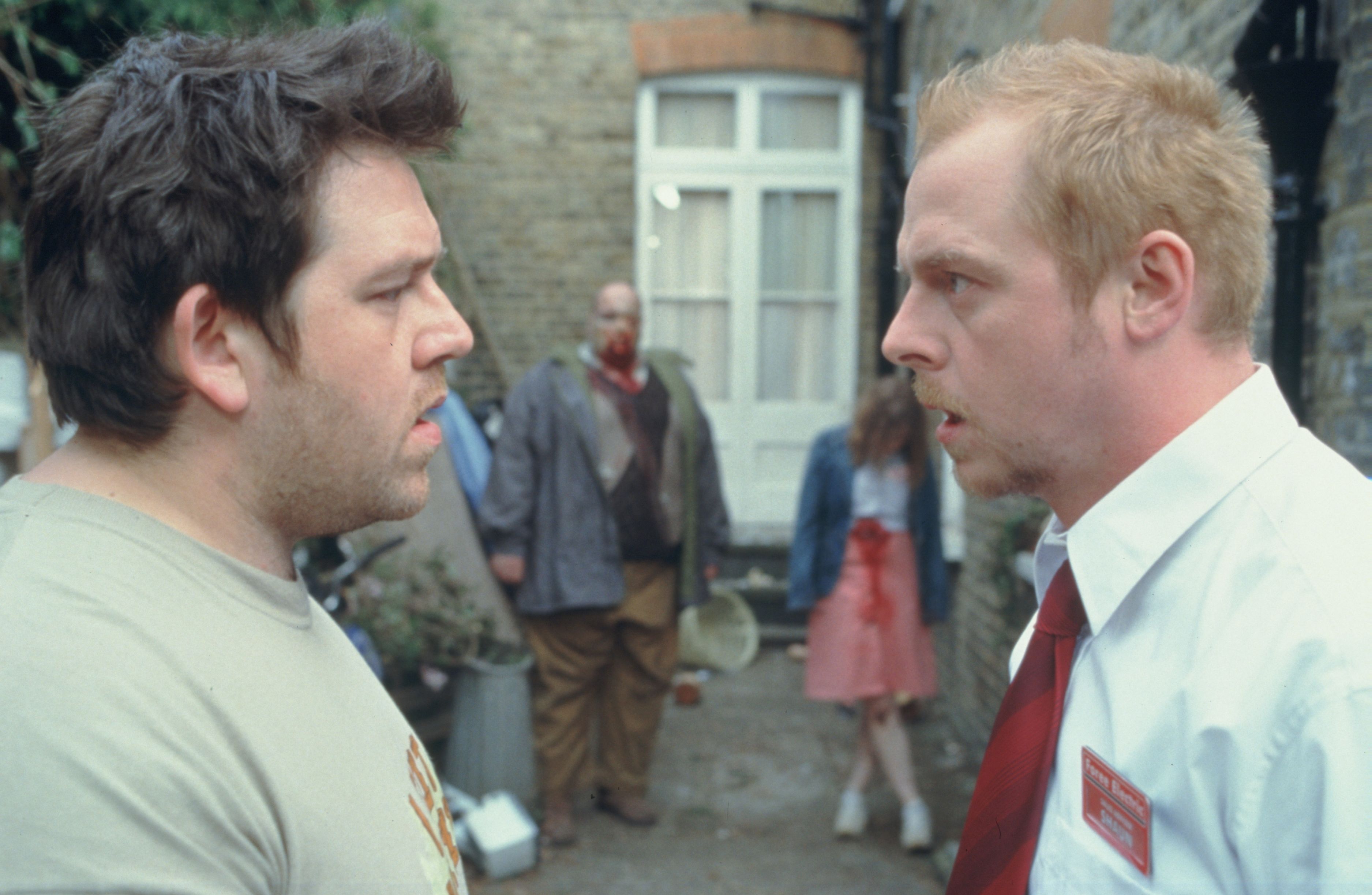
What was your goal behind programming the the two folk-horror films?
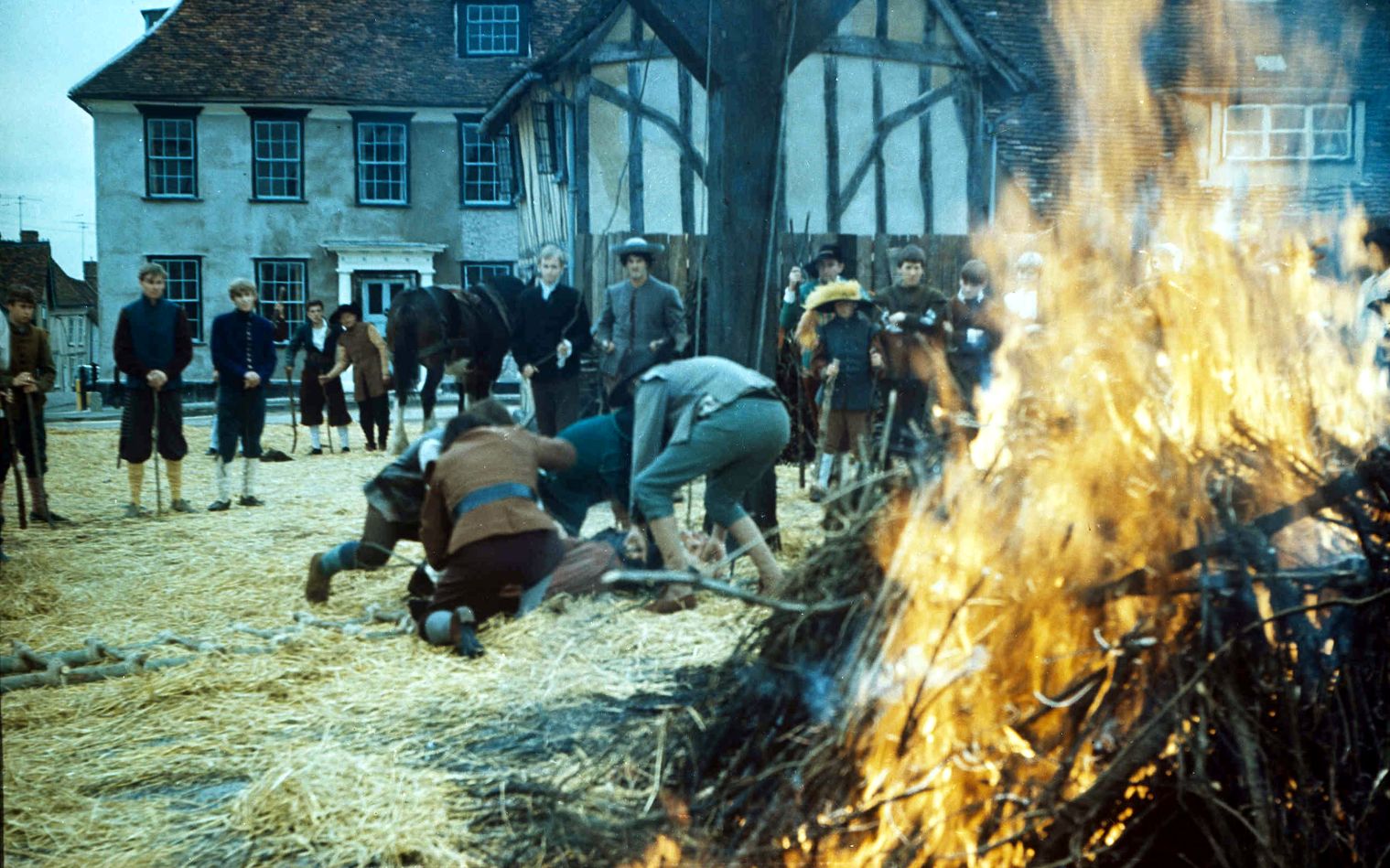
So with Witchfinder General + A Field in England, the period is a good link. If you look at the years that those films are normally set, they're all within about 30 years of each other (amidst the English Civil War).
It's also a little bit tied into the re-release of The Devils, the Ken Russell film, which is coming back out again at the end of this month – which HOME will be showing as part of the BFI restoration release.
So they all share a kinship. And so, to be able to show the Witchfinder General, The Devils, and A Field in England, which all keep you in that period, is exciting.
And people have a real love for folk horror as much as anything else in the moment. That's made a huge comeback in the last few years.
Plus, Witchfinder General is not shown very often and it's a film where, while a lot of people know the title, they have no idea of what it might be.
Dare to embrace the double-bill this Halloween?
Scream, and scream again, in FilmFear’s lineup of double-bills over Halloween weekend, starting Thu 29 Oct.
Choose from four expertly curated and fearsome double-bills by tapping below: