

Heroic bloodshed: Q&A
A closer look at Hong Kong’s most explosive film genre
1980s Hong Kong was a hotbed for rapid cinematic innovation.
During this period, an explosive-laden subgenre emerged that would change the course of action cinema as we now know it: heroic bloodshed.
We can loosely characterize the genre by nihilistic antiheroes, gritty urban shootouts, and (of course) guns. Lots, and lots, of guns.
So far, so simple.
But what originally led filmmakers to this specific style? Why was Hong Kong the perfect setting for heroic bloodshed? And how can we still see its legacy lingering today?
Ahead of the Heroic Bloodshed - Hong Kong Action Weekender, we spoke to Andy Willis, HOME’s senior visiting film curator, to learn more…
Andy Willis, Professor of Film Studies at University of Salford, answers our questions about “Heroic Bloodshed” films…
First off, what’s your connection to HOME?
Andy: “So my day job is Professor of Film Studies at the University of Salford.
Since HOME opened, I've been what’s called a senior visiting curator for film. And basically, that's involved collaborating and coming up with ideas for seasons – like the Hong Kong Action Weekender – or Q&As.”
So what was going on in Hong Kong during the 1980s in terms of cinema?
Andy: "I think there were two things are going on in Hong Kong.
At that time, Hong Kong was one of the major film producers in the world. Throughout the 50s, 60s and into the 1970s, there was a studio system in Hong Kong. So they would produce lots of films with the same kind of studio structure you would see in Hollywood.
And there would be sporadic times when films would break out into the West. But Hong Kong film productions would be very popular throughout Asia.
The Hong Kong films would be the kind of the benchmark for the best action films.
And then in the 1980s, there emerged what's often called the Hong Kong New Wave. So a lot of directors appeared in the late 70s into the 80s who had a different approach. By the 80s into the 90s, you get some directors who are associated with the New Wave and some directors coming out of the studio system.
And it creates a really interesting, fertile melting pot for different kinds of directors and producers and writers to be working in Hong Kong. A lot of them try to take new approaches to established Hong Kong genres – like martial arts films, kung fu films, or sword fighting films – but also crime films, which had been historically popular in Hong Kong as well.
And so these films that HOME are showing are examples of that new take on the crime film. I think that really caught on and became influential throughout the world.”
How did this genre influence films around the world?
Andy: “For crime films, you could see Indian films, Japanese films, and ultimately American films that takes on visual cues and some of the structures of doubling, like that uncertainty of who’s the good guy and who’s the bad guy.
Generally, I think you can really see the influence of Hong Kong directors in American films, because John Woo and lot of these filmmakers later went over to America to make films.
Ringo Lam also went to America. He didn't make big blockbusters, but he made smaller American films. Choi Hock, who was the producer of A Better Tomorrow, went to America to make films.
It's around the kind of 1997 handover of Hong Kong back to China that these filmmakers looked to see if they could work elsewhere, in case Hong Kong changed and they wouldn’t be able to make films in the same way. So you start to see that influence of Hong Kong Films, particularly in America, after that period.
And it goes through to things like The Matrix using Yu Wu Ping, who was a Hong Kong fight choreographer. So the style, the look and the thematics of the Hong Kong crime films, starts to influence American films in the period after John Woo went to work in America (after he made Hard Boiled).
So this style of action that Hong Kong was doing, the kind of kinetic, visceral action that Hong Kong cinema had, did start to bleed into America.”
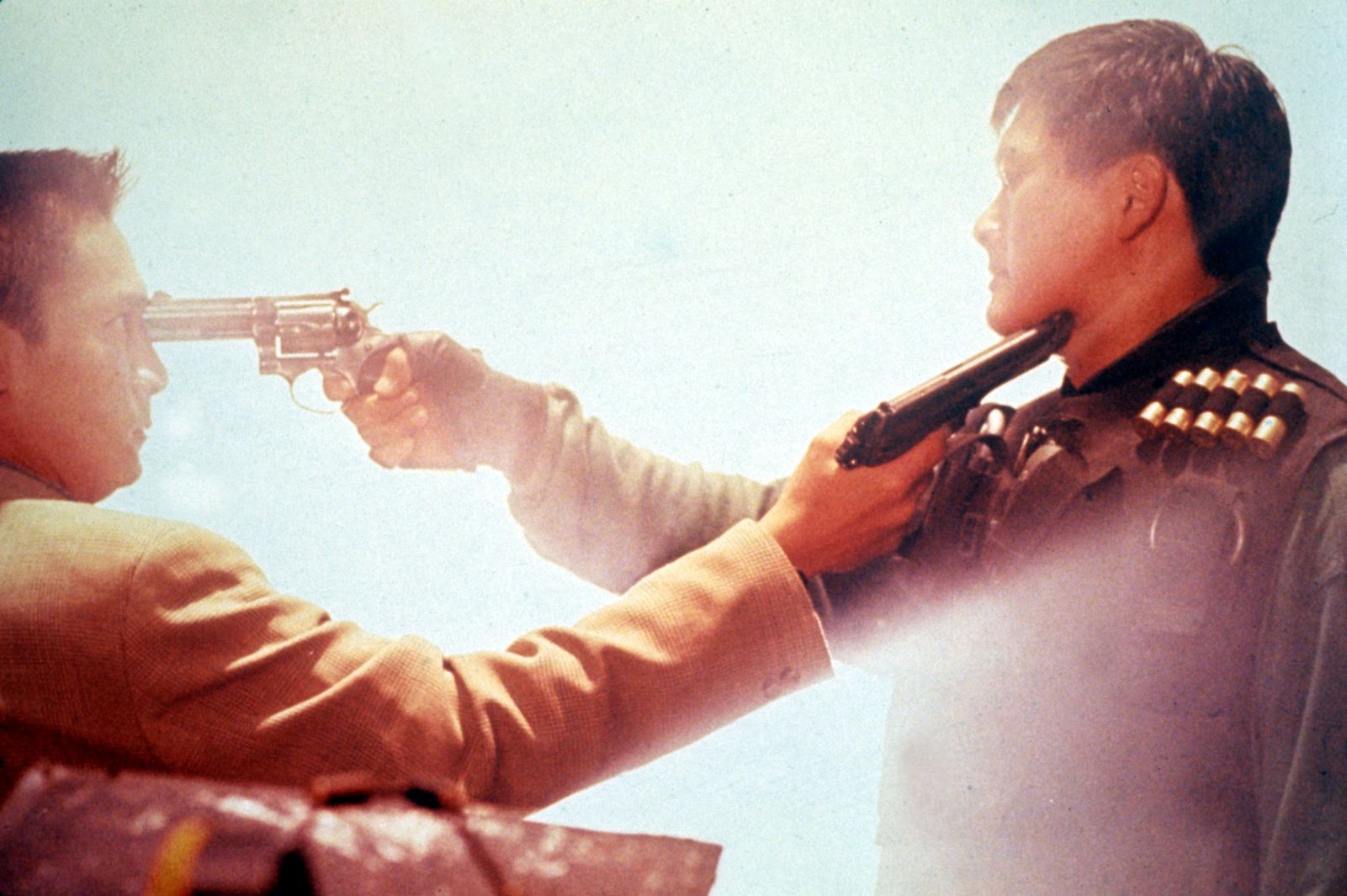
Image: Hard Boiled
Which movements or filmmakers do directors like John Woo build on?
Andy: “The influences of world cinema are always fascinatingly circular.
So John Woo will talk about one of his favourite films being Butch Cassidy and the Sundance Kid. And I think when you look at his films and the relationships between a lot of his characters, I think you can see the sentimentality of that in Woo’s films.
But then he also has spoken about being influenced by Sam Peckinpah and films like The Wild Bunch in how he filmed a lot of his shootouts and his action scenes, in terms of its use of slow motion, its use of editing, the standoffs that he sometimes has, like the big standoff at the end of The Wild Bunch.
With these films from this period, this is where people started talking, as they did with Peckinpah, about how balletic the choreography of the sequences is in John Woo's films. And I think that's something that comes directly from films like The Wild Bunch.
He's also influenced by Kurosawa, the great Japanese director, and Kurosawa himself is influenced by American Westerns.
So that circular twisting thing exists there.
You can also see a lot of influence from Jean-Pierre Melville, the great French crime film director. John Woo takes a lot from the visual look of Melville's films, the coolness of his mise-en-scène, the iconography of the gangster film via Melville, his use of colour, that dark and a lot of contrast.”
The “bloodshed” is self-explanatory, but what makes these films “heroic”?
Andy: “I think that in a lot of the John Woo films (who directed most of the films in this weekender), there's a sense of destiny amongst what's going to happen.
So you have that sense that the characters are on a preordained journey and that they have to follow it, and then there's a logical end to that journey, which inevitably involves the big shootout scene.
There’s this idea that the only thing sometimes when things are closing in, the only thing that the hero can be in control of is their own ultimate destiny – and they choose to walk towards death, rather than to run away from it.
I think it presents it as a final a final act of heroism. It depends how you define heroism, I suppose. But it's that sense that when everything's against them, they'll step towards their fate rather than try to avoid it.
And once that's laid over with the visual style, there'll be slow motion, there'll be the overcoat flowing, and then there'll be doves soaring (If you see any spoof of John Woo’s films, it will always have a slow motion shot of a dove flying…).
In the midst of the blood flying, the bullets flying and the blood spatters, there's always a sense of something heroic. And I think the slow-motion visual style and the way in which people move really encourages audiences to think like that.
It really extends it out and you get to see the kind of sacrifice, if you like, that the hero chooses.”
What kind of differences will audiences spot between the films over the weekend?
Andy: “The interesting thing was to put them all together over a weekend to try and give audiences the experience of seeing a number of these films together.
Audiences can watch City on Fire by Ringo Lam and compare it to John Woo’s films, and see how their styles differ.
Their films, their visual style, and their approach is quite different.
I think even though East Asian cinema generally is quite melodramatic, so the films are all quite melodramatic at their core. But I think Ringo Lam’s City on Fire, is much more of an attempt to be more realistic.
City on Fire, as Ringo Lam said, was based on a real heist that took place in Hong Kong of Time Watch company. And I read something that said at the time that he went and watched the trial.
He looked at the way that the criminals were dressed and everything and thought, “I'm going to dress my characters down. These guys don't look like film gangsters, they just look like ordinary blokes.”
So he brought that to the film. Whereas in John Woo films, they're very stylized, the way they dress.
There's certain differences and putting these films together over the weekend, hopefully audiences will be able to draw out those differences as well.
Plus, audiences can see how Woo’s films themselves differ.
Take Bullet in the Head. It’s a little bit more downbeat, certainly for John Woo. It wasn’t successful when it was released at the box office, but it’s since been hailed as one of his best films.
For me, I think it's really interesting to watch that in between, you know, classic John Woo's and just see that he was a filmmaker who could have different tones and approaches.
So yeah, I think putting them together over a weekend as opposed to putting them over a longer timeframe, brings that intensity. And I think these films are interesting because they're quite intense films.
I think if anyone comes and watches two or three of them and gets that intensity, I think that would be quite rewarding.”
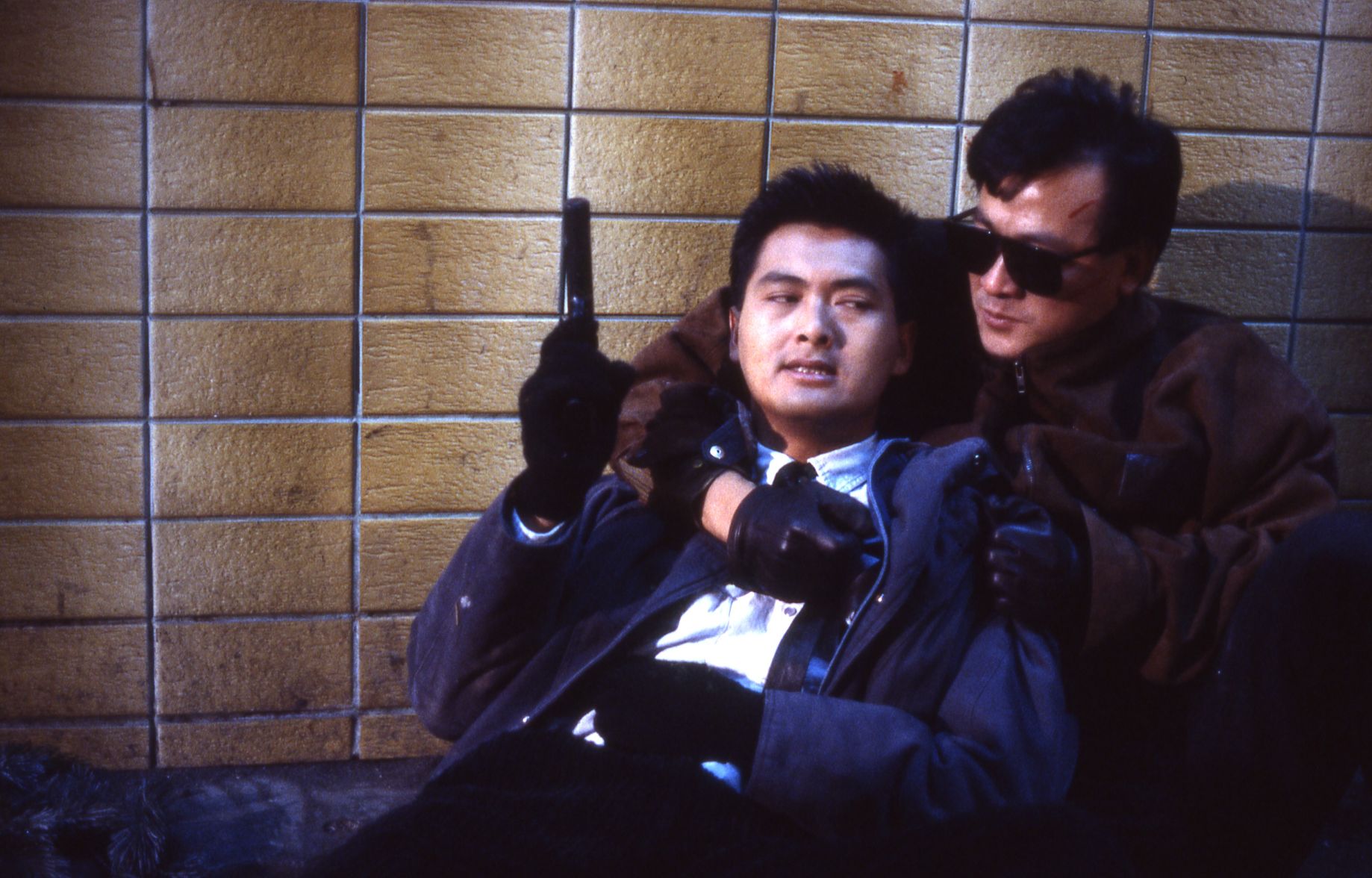
Image: City on Fire
So would you say there’s lots of variety in the lineup?
Andy: “It’s interesting to see how they develop.
There is a big difference between John Woo’s films A Better Tomorrow and Hard Boiled.
They're a few years apart, but Woo made a lot of films. This is the thing with the Hong Kong film industry, directors could make a lot of films back-to-back. They wouldn't make one film and have to wait two or three years for the next film to be released – they'd be releasing films every year.
So it's interesting to see how the intensity of the production means a director can develop quite quickly across a number of films over a few years.
In the later films, there is a link with the kind of kinetic-ness of these physical comedies, but it just shows how in Hong Kong a director isn't pigeonholed somewhere forever. They can, because they make lots of different films. He's making comedy, but he's also making crime films.
I think the intensity of the Hong Kong industry allowed directors to develop quickly and have different phases in their career.”
Which is your favourite film in the lineup?
Andy: “Well, I think Bullet in the Head is my favourite because it's a little bit different.
It's still a crime film, but it's not like the other John Woo films. It’s a bit more downbeat.
And it shows a director who isn't just repeating the same things again and again. Even though he has that reputation for his visual style and heroism and the slow-motion etcetera, he didn't always make just that kind of film.
I think having that screening this one in the middle on the Sunday is quite a useful slot for it to be, to underline its uniqueness.”
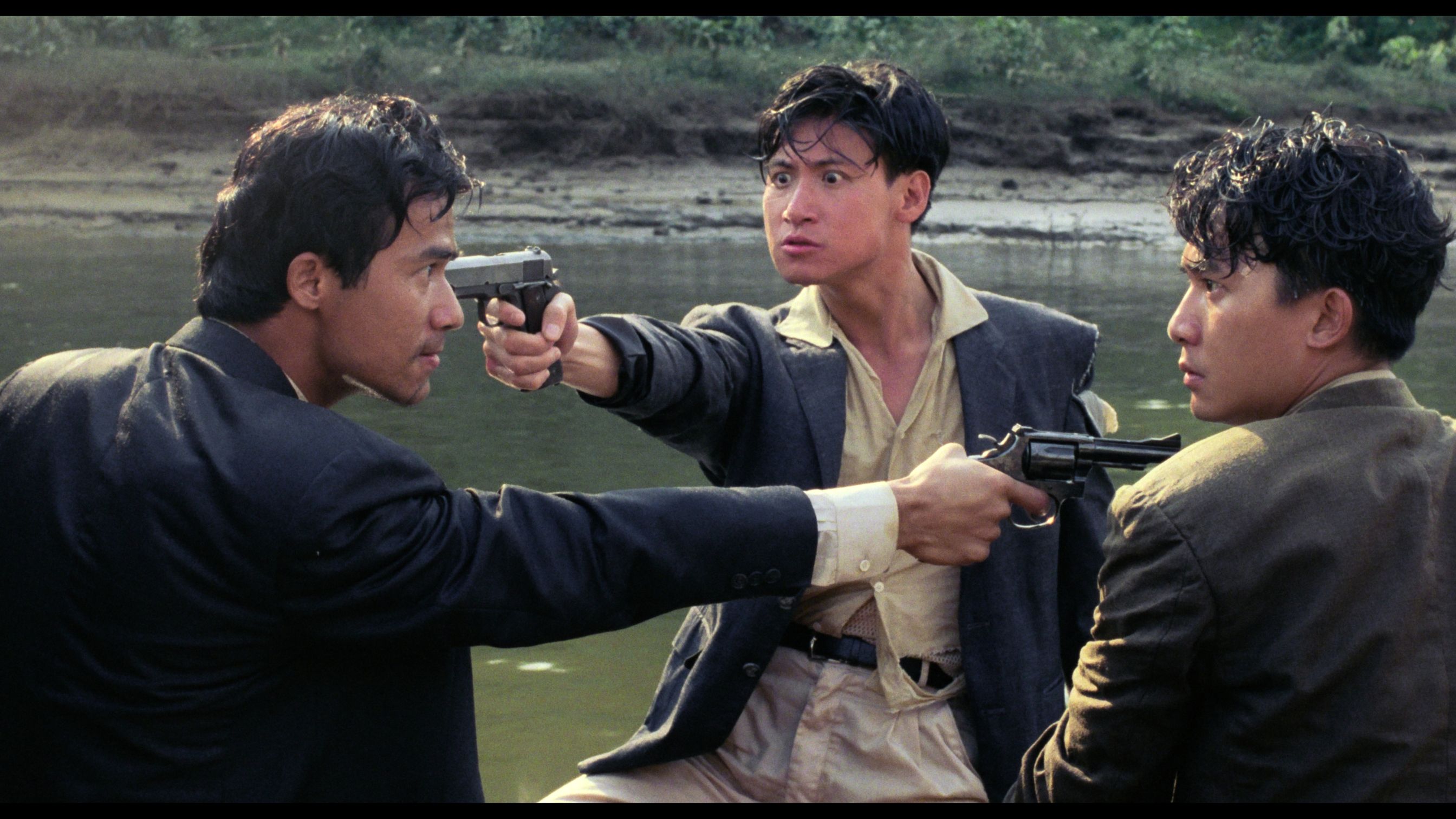
Image: Bullet in the Head
What’s the definitive heroic bloodshed film in the lineup?
Andy: “I remember people saying that Hard Boiled was something of a calling card for John Woo.
For Woo, it was like a summation of all his action styles and the sorts of things he does. People thought he made that film so other people could see everything he could do, and so he might get offered some jobs elsewhere.
Whether that's true or not, I don't know. But I do remember people talking about that, back in the day when it was initially released.
It’d be interesting for audiences to watch it as the last one of the weekend, and see how much it is a kind of summation of all the things that are in the other films.”
What do you hope audiences will take away from this weekender?
Andy: “How exciting Hong Kong film was at that time, how energetic it was, how kinetic, how it just is a brilliant cinema experience. I mean, these are the sorts of films that it's really different to watch them at home and to watch them in HOME’s cinema one.
And the visual style, the kinetic look of them, all of that will really come across in the big screen. I hope, as I always do with everything that HOME does, one of the things that people take away is that films are always better on the big screen. And these are films made during a period when they were exclusively making them for the big screen.
They didn't have in the back of their mind that it might be on a streaming service and they'll shoot differently. They were making films for big old fashioned Hong Kong cinemas. And so I hope people take away the impact of seeing films on the big screen.
Mainly, the impact of Hong Kong films from the past and how amazing they are, but also on reflection, how influential they were and how I'm sure people who haven't seen these films before, when they're talking with their friends after or thinking about them after, they'll say “oh, there were bits like that in this American film…”
Discover the explosive world of Heroic Bloodshed on the big screen
HOME's Hong Kong Action Weekender season presents five undeniable classics of the heroic bloodshed genre, showcasing the movement’s major players as well as many of the hallmarks of the genre, such as stunning action choreography, brutal violence and operatic melodrama. You can catch them at HOME Fri 26 - Sun 28 Jun.