

Film in Focus: On the Sea
Putting a film under the spotlight...
This month, Rachel Hayward (Head of Film Strategy at HOME) chooses the film she’d like to put under the spotlight: On the Sea.
Directed by Helen Walsh, this film takes an intimate look at desire within a small coastal community.
We discuss with Rachel what's so unique about the film, and why she's excited to screen it at HOME...
So firstly, what’s the film about?
On the Sea, is the second feature film from writer-director Helen Walsh. It centres on a married man called Jack, who's been married to Maggie, for a significant amount of time. They've both lived and worked within the same community their whole lives.
Jack works a really tough job farming mussels in North Wales alongside his brother, Dyfan. Their family business has hit rough times and Dyfan harbours resentments towards Jack. Everything about Jack’s life is connected to the community, to family, to his marriage, to his son: everything is really quite closed and small.
Then, one day he has an encounter with Daniel, a stranger who comes into the community and creates a point of disruption and also a point of opportunity for romance, passion and desire, for Jack.
Why did you choose this film to spotlight?
Back in 2016 we screened Helen Walsh’s debut feature, The Violators, which focused on a young woman in Birkenhead who finds herself living on the margins after testifying against her abusive father. This was such an interesting first film that I was really keen to see what Helen had created next.
I’ve also read Helen’s novels Brass and Once Upon A Time in England, and think she has a talent for crafting believable, troubled characters across her work. Plus, by spotlighting On the Sea, we’re spotlighting local talent as Helen is from the Northwest. I wanted to showcase a woman filmmaker and to explore a story that is, on the surface, quiet and intimate but has a lot more bubbling underneath.
Over 10 years, have you seen a difference in how Walsh directs a film?
There are a number of things that are very similar, within the themes and approach to the characters, but there's also a lot that's really different. And when Helen comes for a Q&A (this took place on Thu 23 Jul), that's probably one of the things I'd like to tease out a little bit more and get her take on it.
The Violators was about a young woman who's going through an incredibly tough time. And within Helen's writing and the filmmaking work, we see people who are marginalised and living in really difficult situations, but most for the most part, she's focused on female leads, particularly really strong, gutsy, punchy female characters, often with the narrative being driven by their sexual activity. So, one thing that's notably different in On the Sea is that the leads are male and markedly more reserved.
We're also exploring an older characters in On the Sea, so film itself is dealing with a different set of challenges. Rather than the central character being a young woman as in The Violators, you're seeing events from a middle-aged perspective. The film delves into masculinity and how much pressure external influences can exert.
In terms of the stylistics of the film, there's a lot of similarities: it's a low budget film, you see the same handheld camera work in there. You've also got that specificity of place, which is a significant factor in the way Helen’s work is crafted.
Why do you think that small Welsh town is an important setting for On the Sea?
The small community setting is central to the film. There’s a real duality in how home, family and community are presented. We see clearly all the love that can radiate through close family, particularly in the way a loving scene in the pub between Jack and his wife Maggie is shot, but we also see the suffocation and the challenges of running a family business and being in the same place your whole life. The story explores the line between a sense of duty to a place and belonging there; about shrinking or growing in a small town, about whether closeness is cradling or smothering you.
Setting the film in this very specific community in North Wales anchors the characters in clearly defined reality, though I also think there’s a universality about Jack’s story.
Thinking more about the Welshness of the film: the cast includes Celyn Jones – most recently seen at HOME for a Q&A with Madfabulous, which he directed, and Leisa Gwenllian, whom audiences will recognise from her lead role in the Welsh language drama Effi o Blaenau. In On the Sea, she has a supporting role, but a role which gives the film one of its most poignant scenes.
Does nature and the Welsh scenery play an important role in the film?
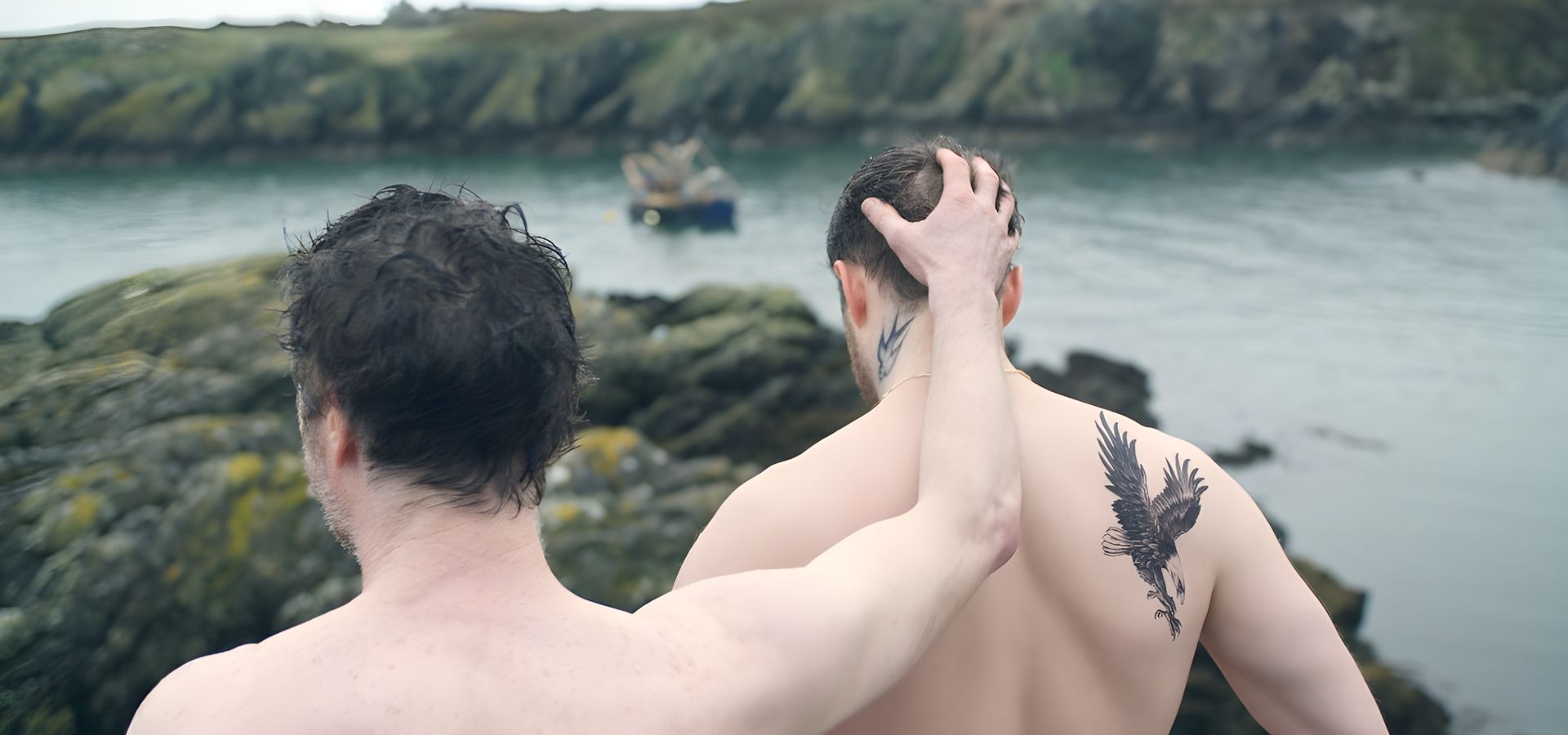
Yes, right from the opening scenes of the film, we get that first sense of the strong connection to the sea, but also to the landscapes of Wales. We open the film with the brothers and the younger members of the family working on the mussel beds. This is tough work and with the handheld, close camerawork we're right in the action. The sea and sky are cold and harsh, shown through shades of grey and greyish blue. And that slate colour palette continues through most of the film. We’re aware of the beauty of the landscape beyond the shoreline, but the cinematography avoids giving us a picture postcard version of this particular stretch of coastline - there are no panning in shots that show off the beauty of Wales. That's not the approach here. We’re meant to feel enclosed. Only later in the film (no spoilers here!) is there a pivotal moment that allows the landscapes and vistas to start to change.
When you speak to Helen (the director) yourself, what are you most excited to ask her?*
I’m keen to hear how (or if) Helen uses her background as a novelist to inform her writing process for her films and how she shapes her characters as they are such a defining point of her work. I'm interested in the shift from female characters to a male lead and learning whether there was a particular reason for this.
*Rachel hosted a Q&A with Helen Walsh on Thu 23 Jul.
What kind of audiences might enjoy this film?
Fans of new British filmmaking; audiences looking for LGBTQ+ films; audiences looking for nuanced stories about love and masculinity; and fans of the cast – Barry Ward, Lorne MacFadyen and supporting cast are all excellent.
Finally, how would you describe this film if you only had 3 words?
Atmospheric, poignant, passionate.